Starting the trip strong, the first three days included some of the best museums I have ever been to. The Louvre and the Musée de Cluny both showcase the long history of Paris, with a wealth of centuries-old art and architecture. Despite being “out of the timeline,” I found the trip to be a great setup for all the future eras and styles we will encounter throughout the trip, which makes me excited to revisit the gallery at the end of the trip. The French painting gallery in particular really got me thinking about historic French Art, leading me into my thoughts on the Musée de Cluny.
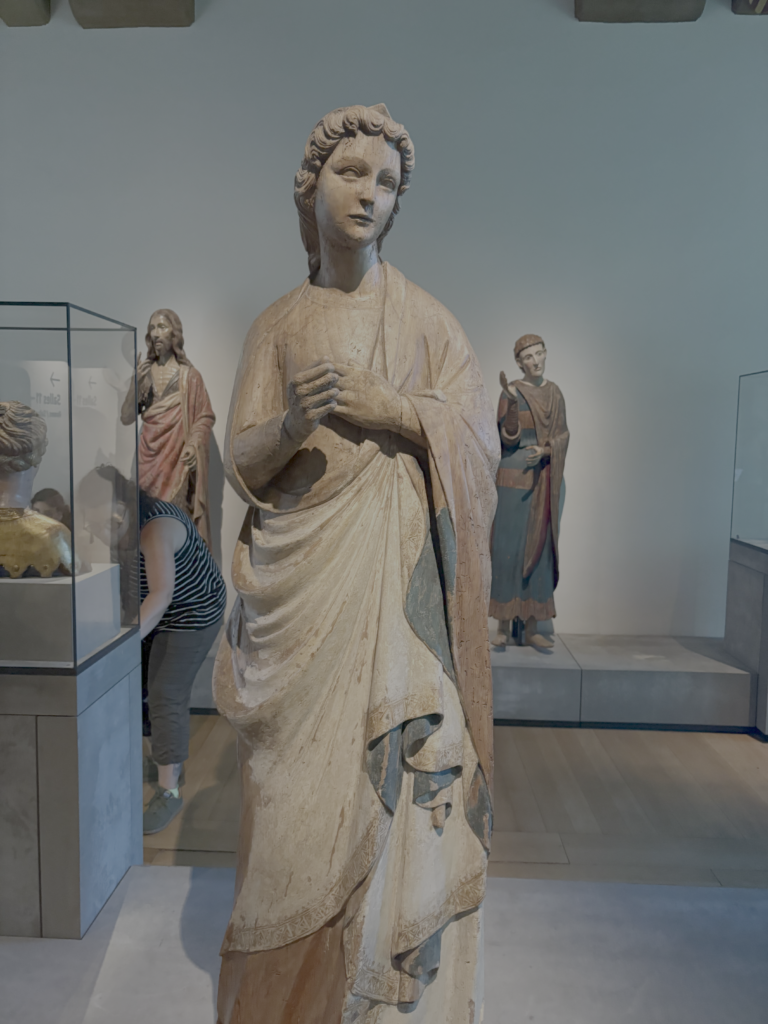
The number of statues in the Musée de Cluny was truly impressive, with rooms filled with impeccably carved statues dedicated to various saints and icons. After exploring the antiquities section of the Louvre, where I encountered incredible statues like the Winged Victory and Venus de Milo, I couldn’t help but notice the inspiration medieval sculptures drew from the Greeks and Romans. Both statue styles pay careful attention to the posing of the figures and the attention to detail in the folds of the clothes and distinctive features of the face.
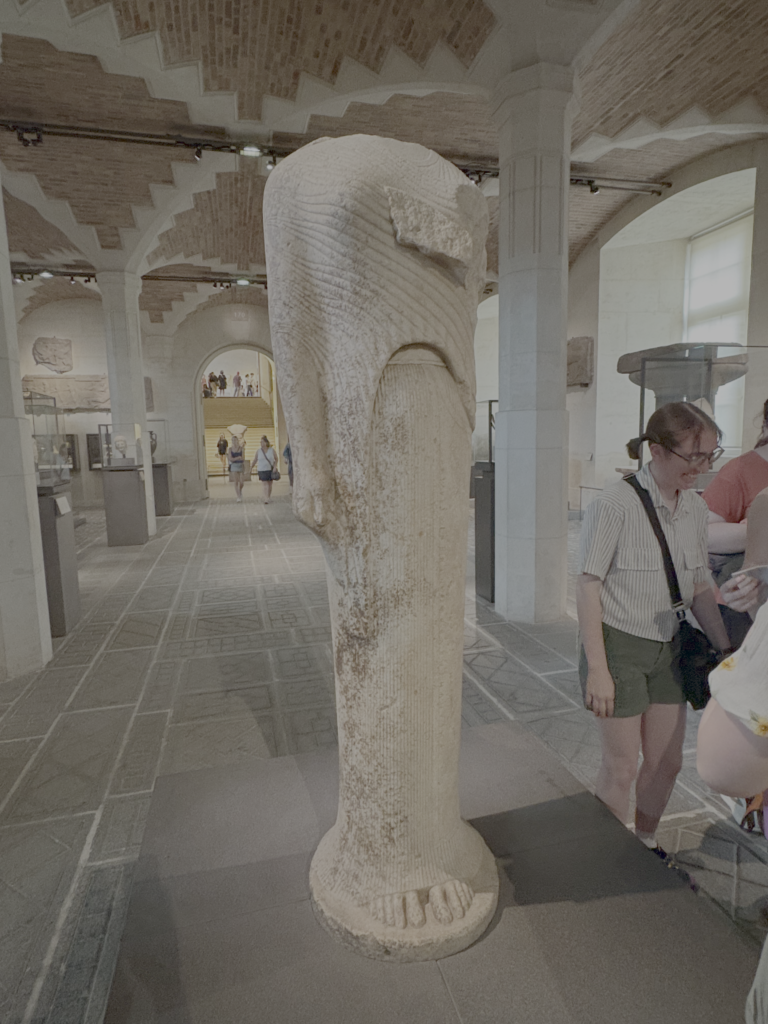
Take these three statues for example. The first is an example of a Kore statue, the Tirage integral de la Kore de Samos, which is an excellent example of Greek statuary from the Archaic period, characterized by its simple pose, bare feet, and the simplicity of the clothing articulation. I was shocked to see such a stunning example of the oldest style of Greek statue, especially considering my fascination with the Phrasikleia Kore. The folds in the cloth is of particular interest when comparing it to the Christian saint statues, as both choose simple but effective attention to the way the cloth moves, attempting to depict it even in stone. The serene face is another similarity between the statuaries, giving the figures godlike presence and cementing them as icons of higher power.
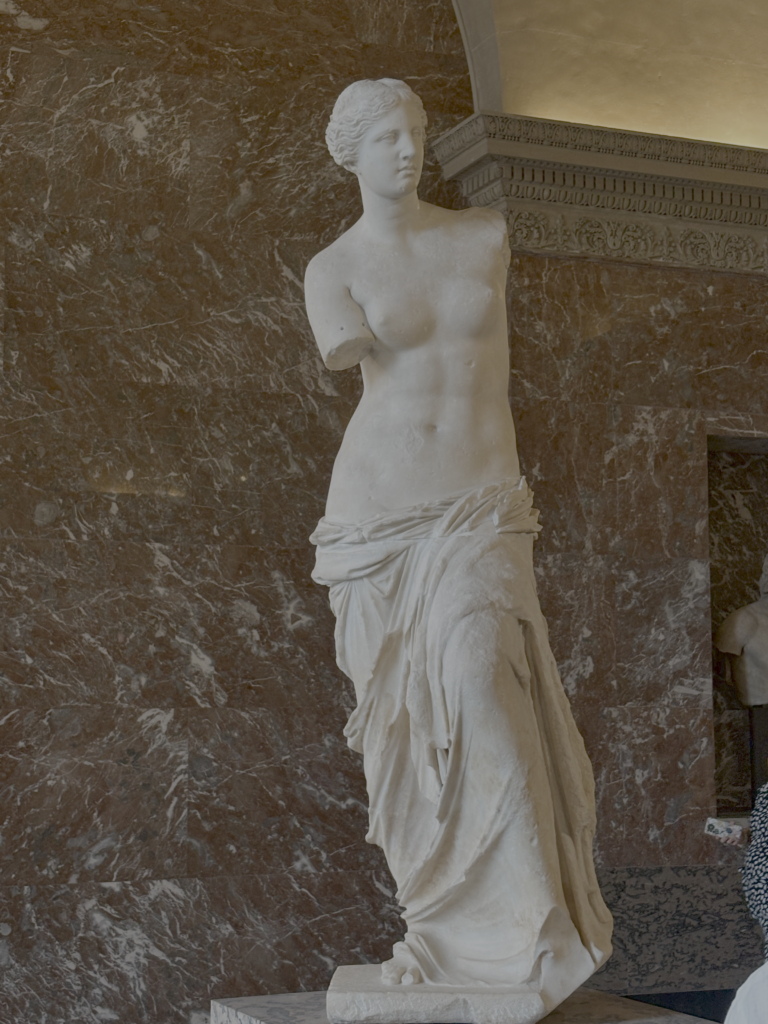
The comparison continues in the greatest breakthrough of the Greeks with Classical period sculpture. The theory of balance and positioning, invented during the Greek art movement, known as the contrapposto stance, is reflected in Christian statuary. There is no greater example of this Greek form method than the Venus de Milo, one of the most iconic art pieces on display in the Louvre. The purposeful angling and bends in the body allow life to breathe into the statues, something lacking in the Archaic period. This careful positioning in the famous Greek statue seems to have had an influence on the Christian sculptures as they seem to attempt the same careful positioning.
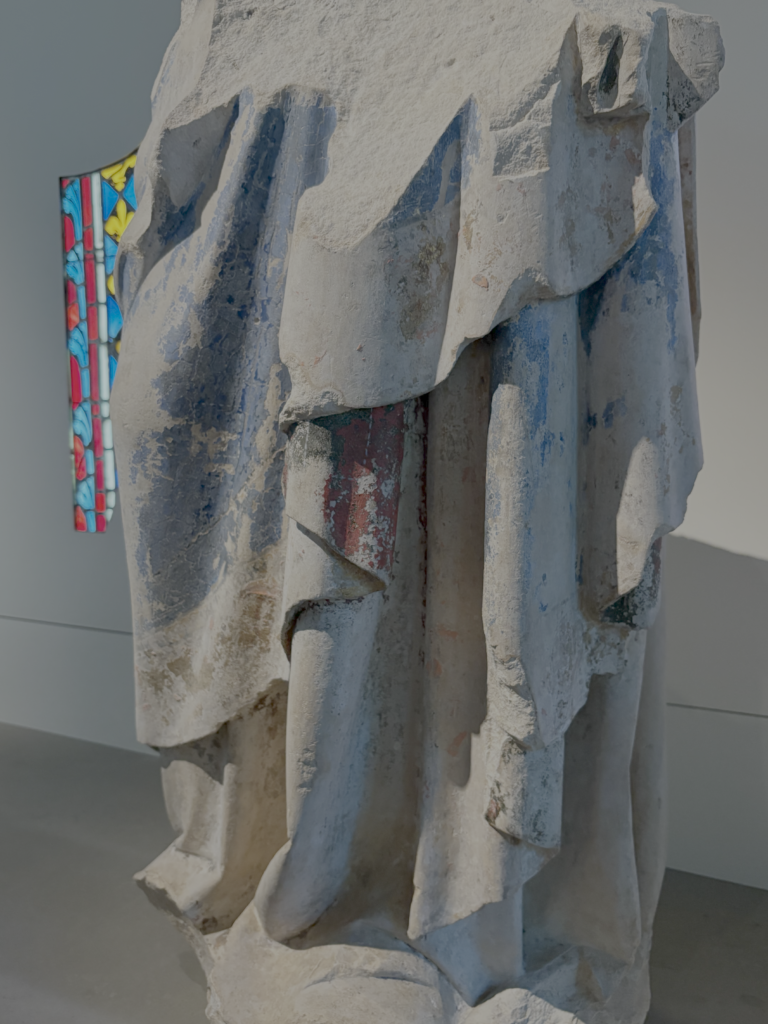
The inclusion of pigment on Christian statues is also reminiscent of statues in antiquity, as they would have also been adorned with bright colors. It’s incredible to visualize how pigments would have looked on ancient statues, as very few examples of Greek or Roman statues with color survive. The MET has a fascinating exhibition, Chroma, on the pigmentation of ancient sculptures, which made this discovery at the Cluny all the more enjoyable.
All this to say (admittedly, very little on Parisian art), it is fascinating to see early French attempts to replicate the statues of Ancient Greece and Rome, as well as their interpretation of the techniques used by ancient sculptors. This interpretation and evolution of art are very similar to the progression of architectural styles and the endless cycle of inspiration and technological evolution. It will be interesting to see how French art continues to develop and draw inspiration throughout the rest of the trip as we explore further along the timeline of Parisian development.