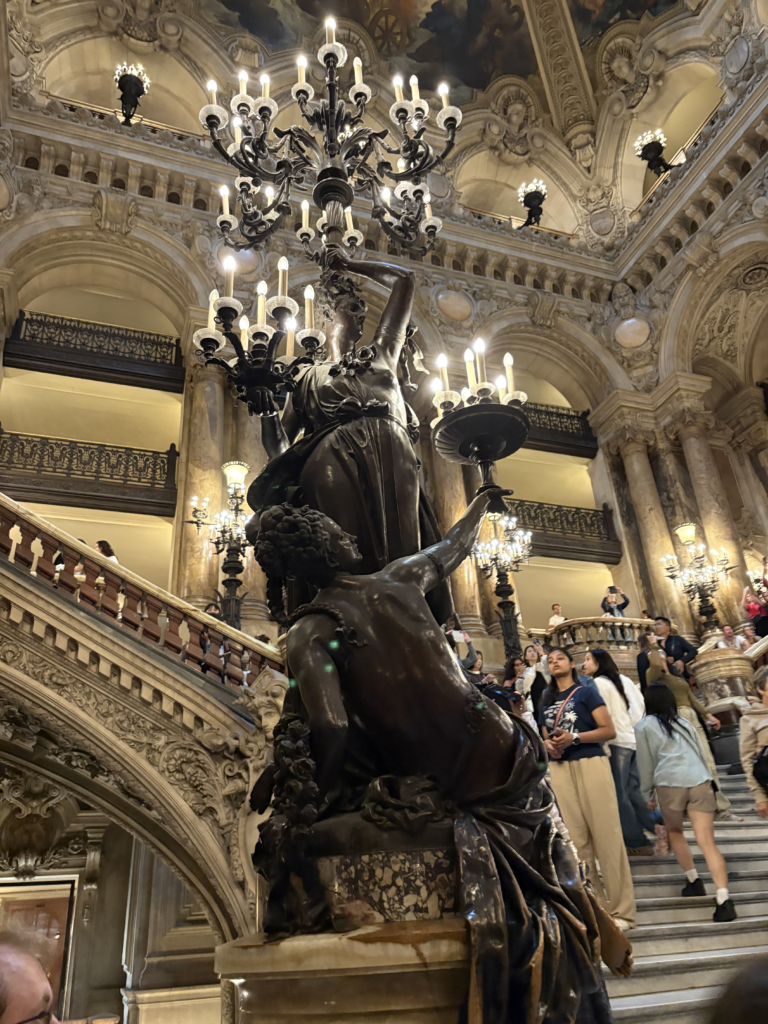
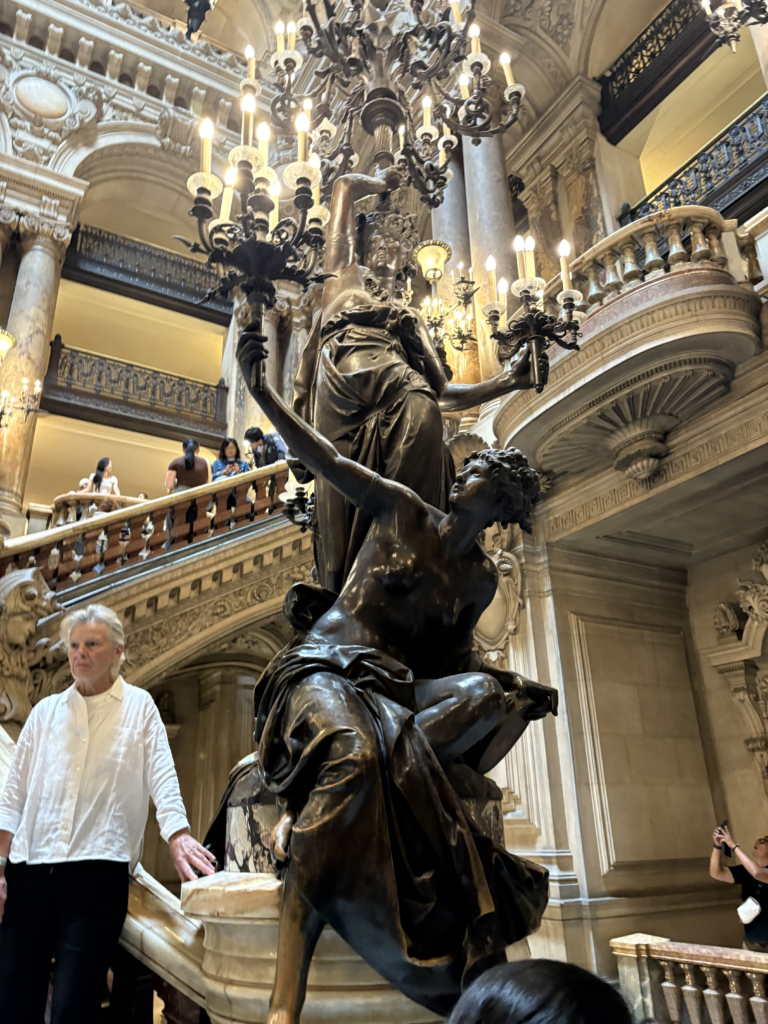
The national Opera house of Paris far surpassed my already high expectations, being one of the most jaw-dropping, stunning buildings I have seen thus far. Seeing the architectural inspiration for the award-winning Phantom of the Opera was very exciting, as the Broadway musical is one of my favorite stage productions.
The start of the visit was a bit underwhelming as we walked out of the metro station, and the façade was covered in a Nike ad. Paired with a sudden downpour as we waited outside, the beginning of the visit was off to an interesting start. As soon as we entered the first chamber, I was instantly in love with the over-the-top ornamentation and grand atmosphere. A combination of the ornate ceiling, beautiful wrought iron lights, and stunning tile work made the space feel luxurious to be in. The extravagance of the interior continued even in the quiet spaces, not meant to be on main display.
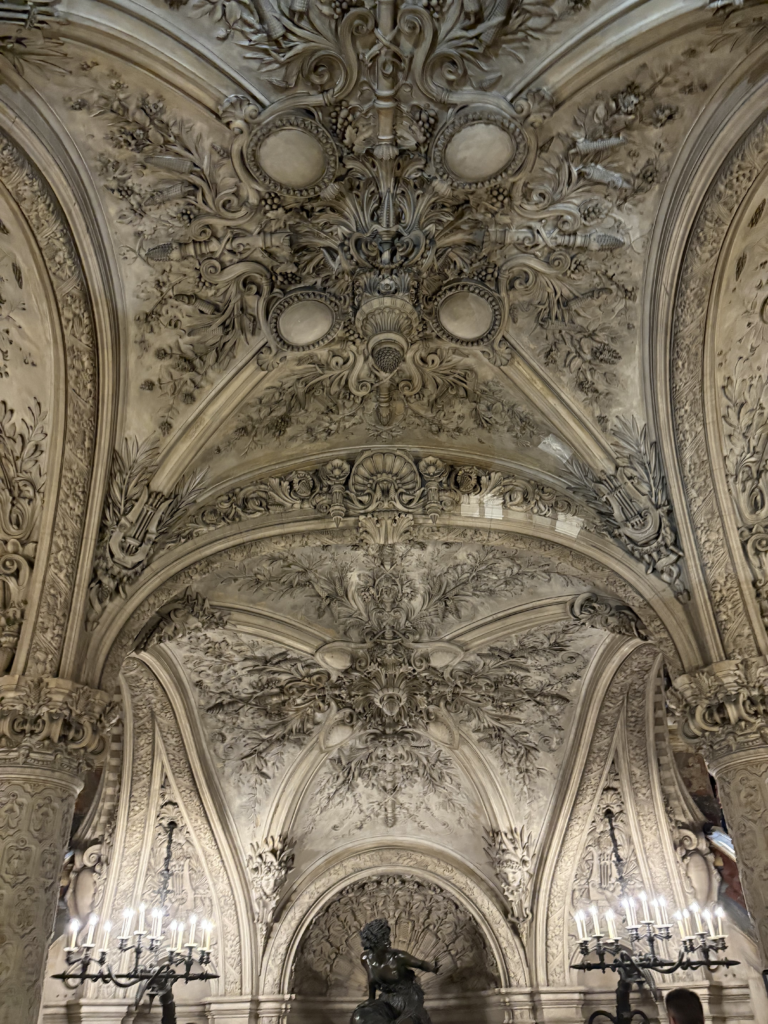
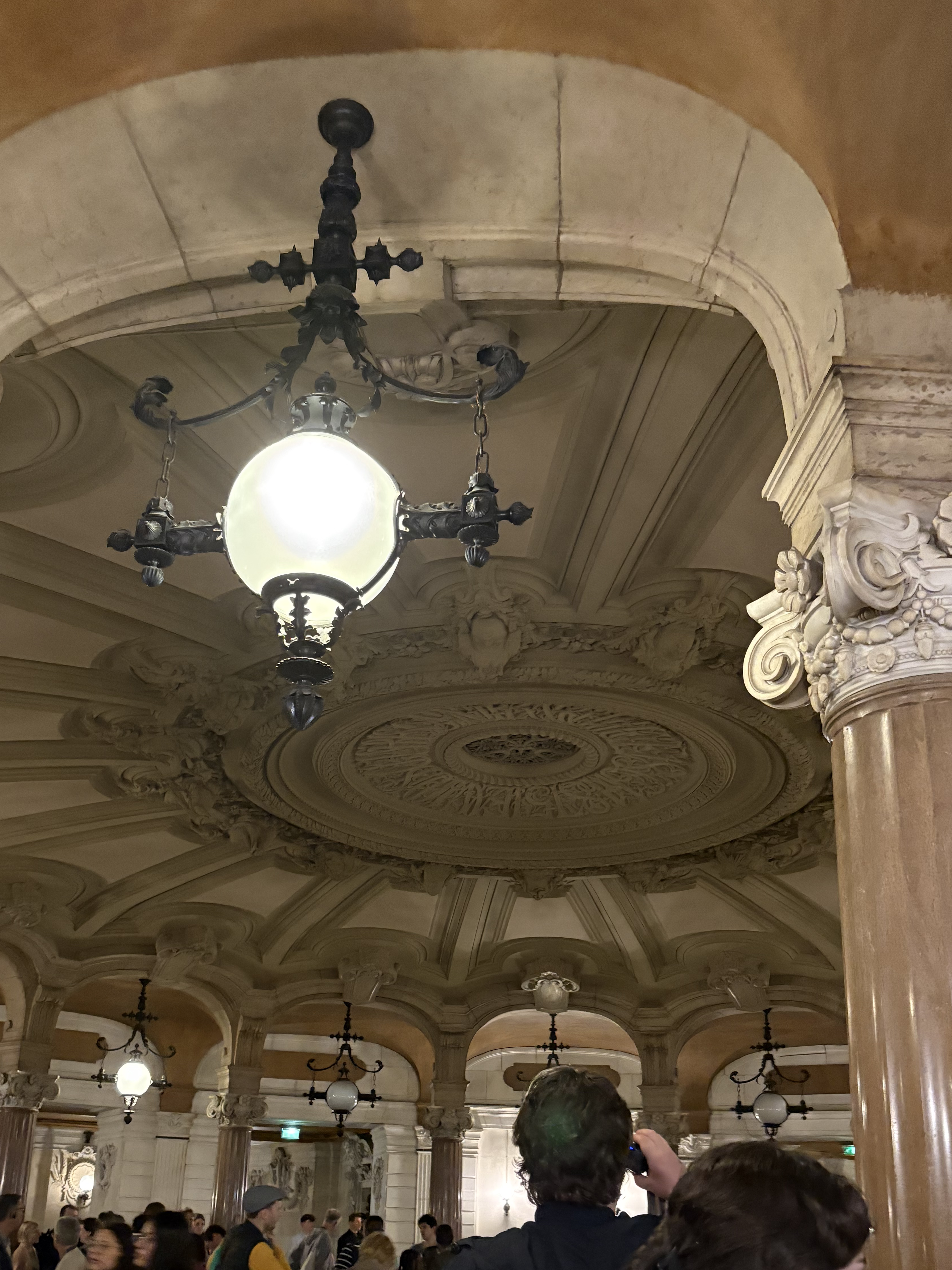
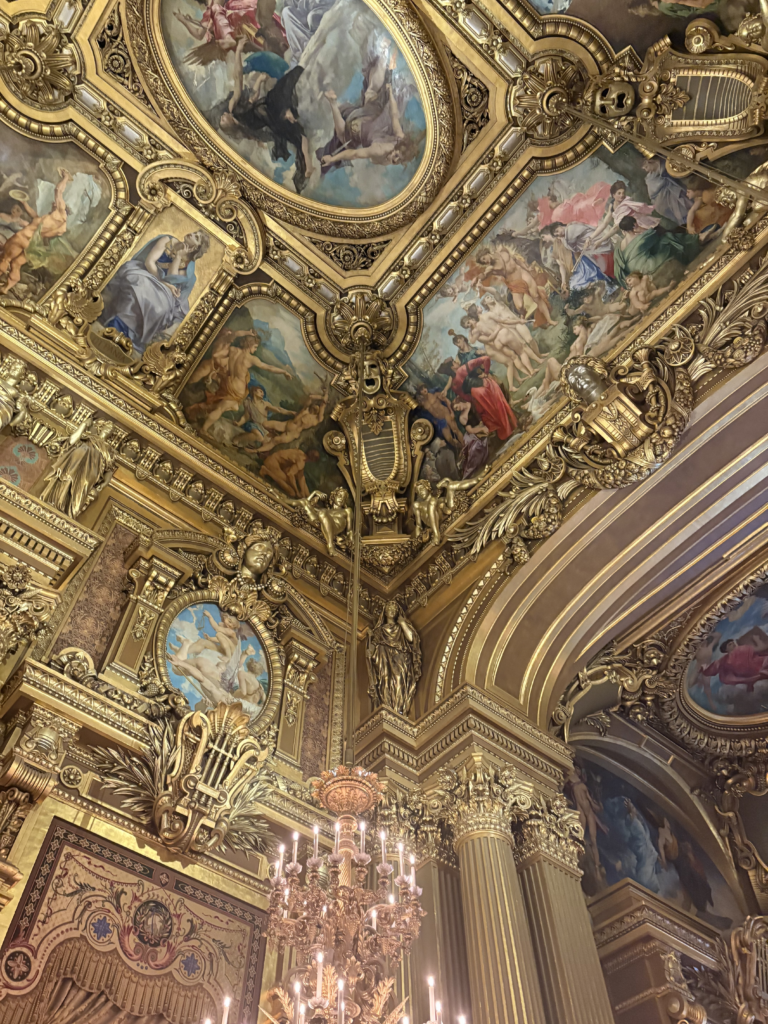
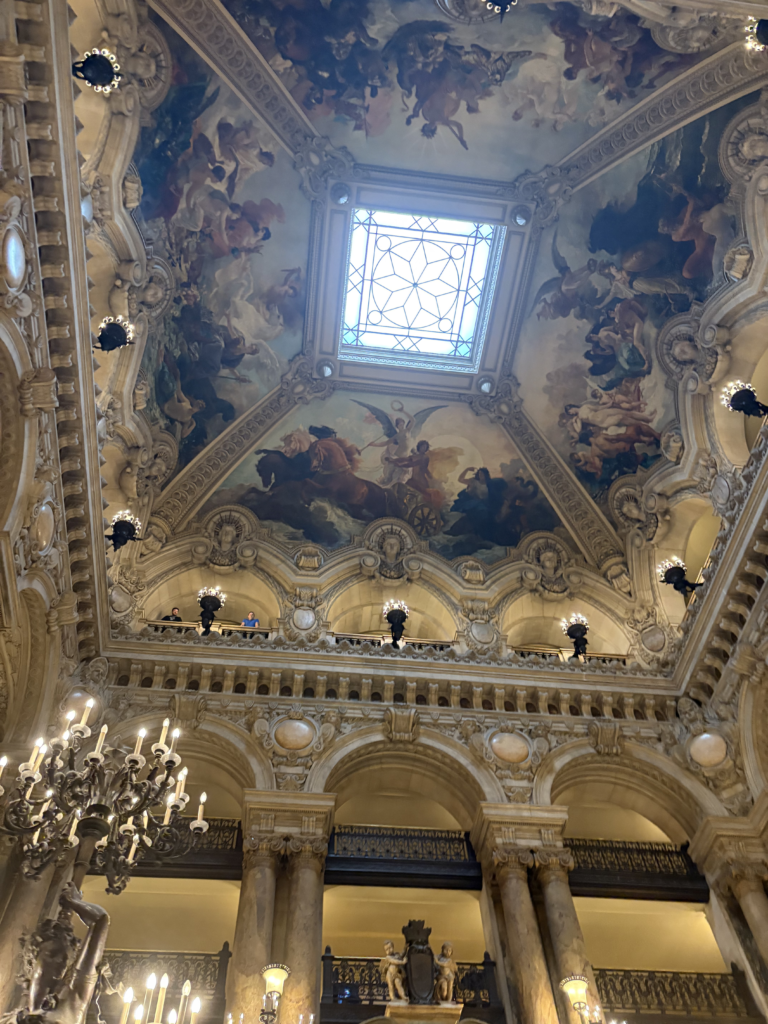
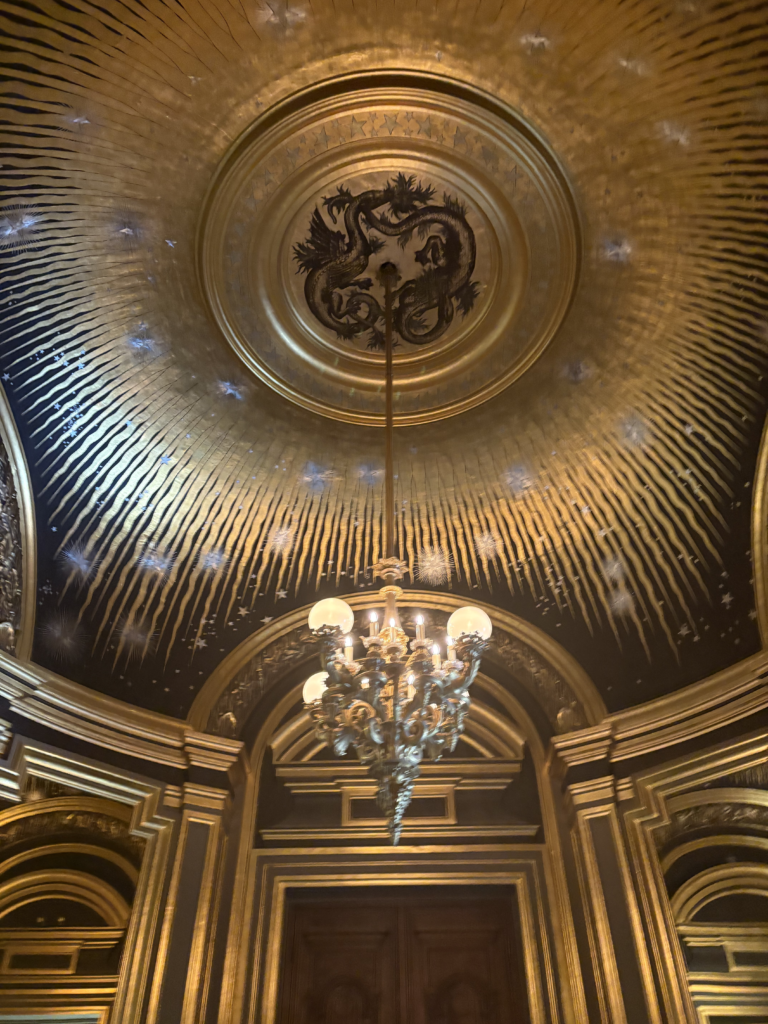
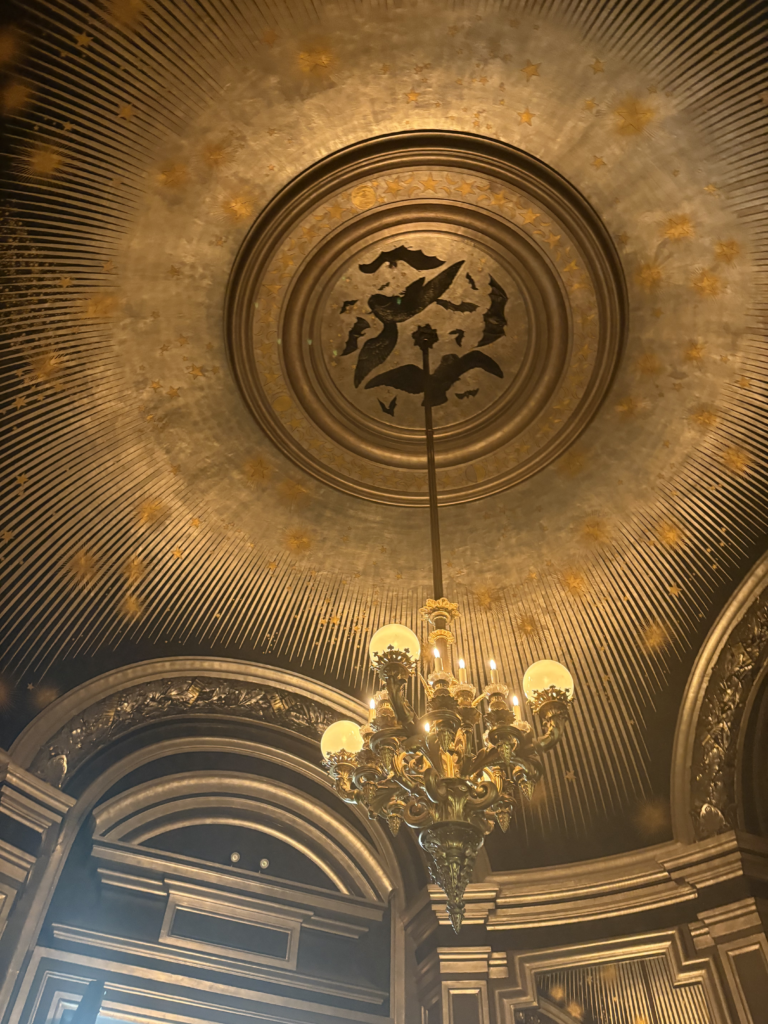
The ceiling of the opera house was an excellent extension of the Palace of Versailles that we visited over the weekend, and it surpasses the palace. Gold frames the wonderfully painted high ceilings, allowing the light to reflect and illuminate the room, and continues to elaborate on the importance of the buildings, providing the elite of Parisian society with rooms reflecting their opulence. The brightness of the room was contrasted with the Sun and moon salons that have dark coloring and accents of gold and silver, respectively. The darkness allows the rooms to feel more private and an escape from the overstimulating richness of the grand staircase and halls. The skylights in the ceiling make the space feel more open and airier, a technique that is later reflected in buildings such as the Pantheon and Printemps.
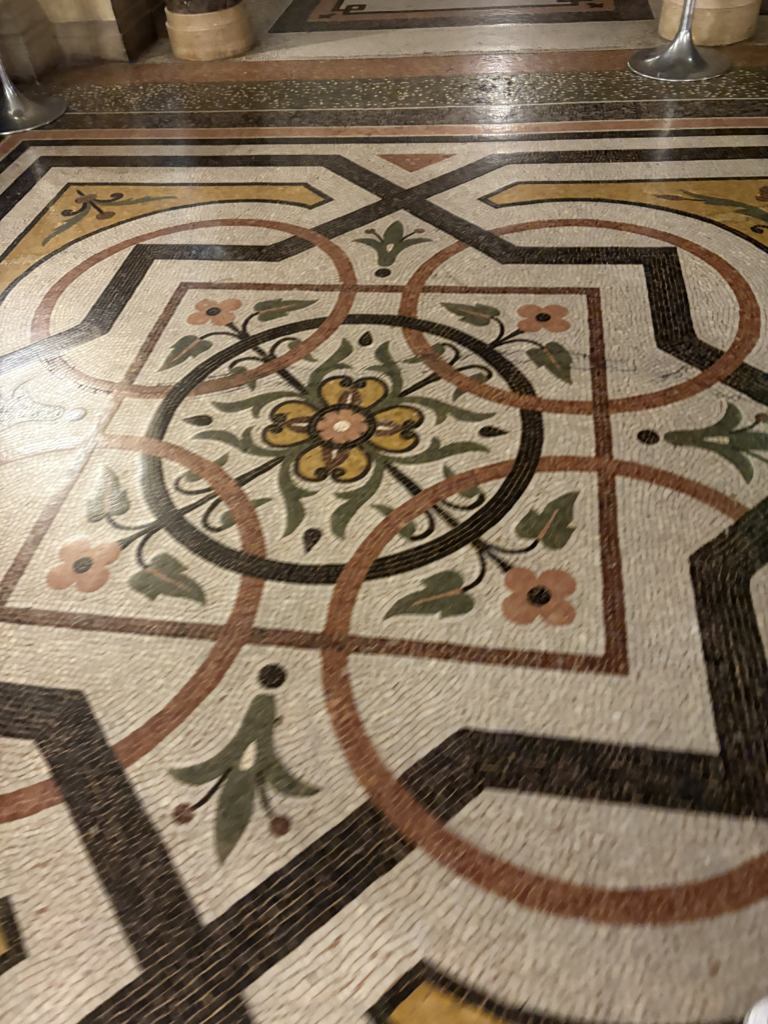
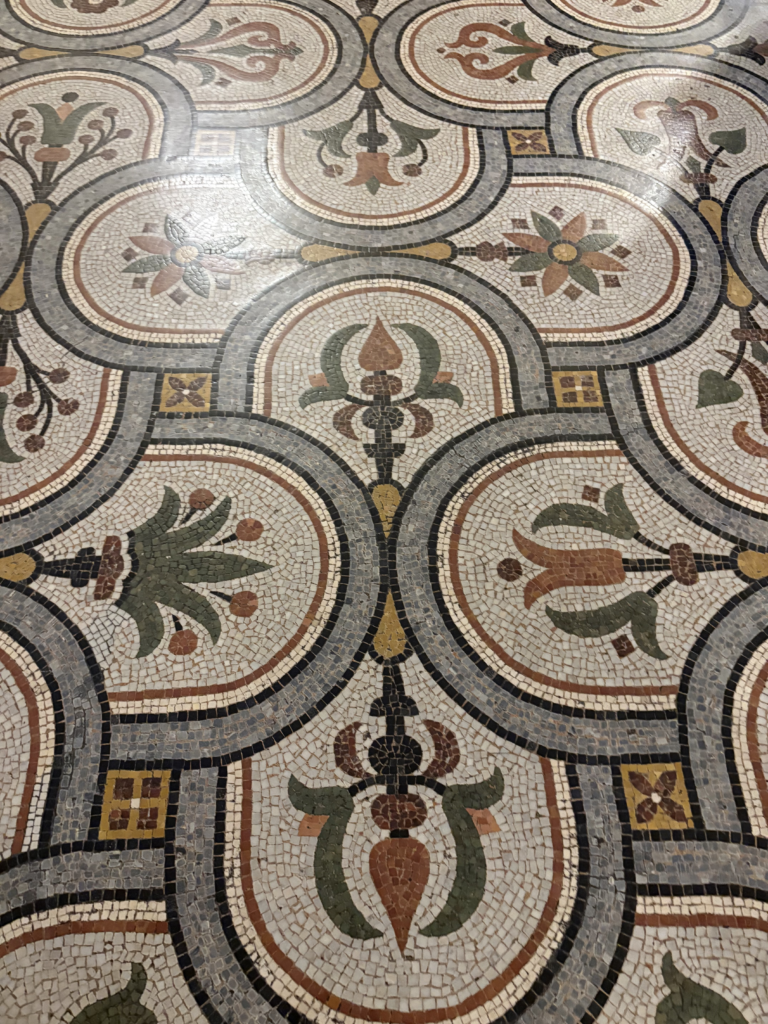
Arguably, the most beautiful aspect of the buildings was the stunning mosaics that filled the floors and ceilings of the opera. The patterns and images created using the intricate tiling elevated the luxury of the building, as the time and effort put into designing and installing the art were clear. In researching the mosaics, I discovered there was a fascinating process behind their installation. Garnier applied an Italian technique to make the process of installing mosaic more economical and efficient, by gluing the enamel to paper with the design on it before cementing the tiles into the ground. This process allowed Garnier to use more mosaics in the opera and create a masterpiece of a building that still amazes to this day.
Finally, the lighting in the opera house was some of the most artful I’ve seen throughout Paris. Both inside and out, the wrought iron lighting features add a stunning and almost haunting atmosphere to the opera house. The grand staircase is home to two beautiful statues that serve as candle holders, both with two women in clothes from classical antiquity. These women hold the main source of light for the building during the night, symbolic of the female performers who would illuminate the stage during the shows and paying homage to the Parisians’ obsession with classical imagery. Though all electric now, it’s magical to imagine what the entrance hall would have looked like lit by real candles in the opening days of the Opera house.