Franprix: A Definitive Ranking of Strange Chip Flavors

This blog post was dreamed up after the MICEFA picnic, as I was introduced to the greatness of Bret’s chips and their bizarre flavors. My next trip to Franprix was dedicated to exploring their other flavors. I wasn’t expecting that many, but was shocked to see that roasted chicken, the first flavor I ever tried, wasn’t even the weirdest. I then became committed to trying all the flavors available at Franprix and ranking them. I wasn’t able to try all the flavors Bret makes because some are only sold at Monoprix and I couldn’t find all of them. Now on to my not opinionated at all ranking!
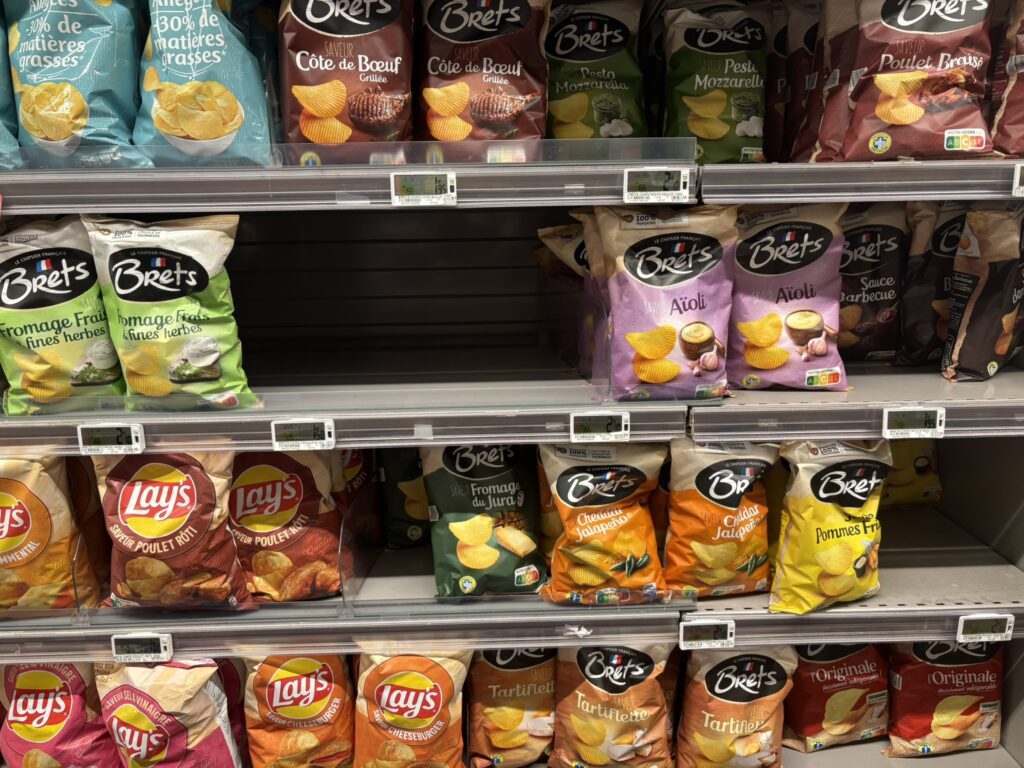
Chip aisle
Brets Chip Section of Franprix

#14: Côte de Boeuf

In last place are the beef steak flavored chips. One of the coolest parts of the Brets chips is how realistic they are to the food they are trying to base the chips on. This skill is a detriment to this flavor as they taste a bit too much like Beef to be a chip. The flavoring was very one-note and didn’t have enough interesting flavor to make me want to keep eating them. This was the flavor I was most looking forward to trying on this journey as I was so curious and had high expectations after how good the chicken flavored chips were, but they were just disappointing.

#13: Chèvre Pigment d’Espelette

This flavor was the disadvantage of being based on a food I do not like, goat cheese. I went into trying these chips knowing I was not going to enjoy them a lot, so they may be a lot higher in other people’s rankings, but they were not great in my opinion. For being marketed as spicy, I don’t feel that they were that spicy. They are not last place for me because they didn’t disappoint in the same way the beef chips did. Luckily, I didn’t buy them, only trying some when offered, so I didn’t waste my money on them.

#12: Sauce Barbecue

The only problem with these chips is that they are French. If you go into trying these chips expecting an American barbecue chip experience, you will be disappointed. They taste like the few French barbecue sauces I’ve had, but lack the sweetness I love in a good barbecue sauce. Overall, they weren’t terrible but could be improved to have slightly more complexity in the flavoring.

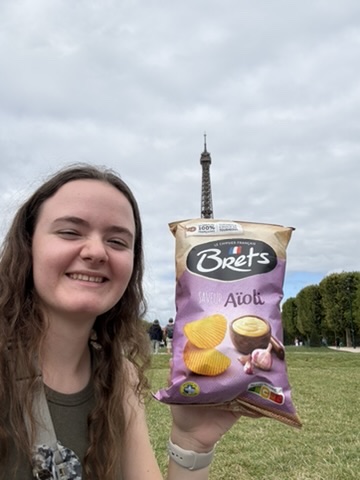
#11: Aioli

I don’t know how to feel about these chips. Aioli is a flavor I enjoy, but not one I would typically eat by itself. I found myself not eating a lot at once, getting tired of the flavor after a couple of chips, which may be good, as it stops me from eating the entire bag at once. I don’t know what to pair with these chips to enhance the eating experience. I love the color of the bag for this flavor. These are the last chips I didn’t fully enjoy, with every flavor after this point being good in my opinion.
#10: La Bretonne

Using the original flavor as a decision point, I would say I liked these a little less, with the butter flavor catching me off guard. Eating them with some cheese spread is still great. The packaging is funny, though, with a woman on it for some reason. A flavor I don’t have many opinions on.

#9: Original

A good potato chip. Nothing much to say here, just an enjoyable chip.

#8: Cheddar Oignon de Roscoff

This flavor was good and better than any cheddar-flavored chip I’ve had in America. I’m not a huge sweet onion fan, which is what the flavor is recreating, but that didn’t take away my experience with the chip. There was an interesting and complex flavor happening with the chip. It wasn’t my favorite, but it was still good.

#7: Sauce Pommes Frites

So this flavor is funny to me, because for a while, I didn’t understand that fries sauce existed, so I was trying to figure out why they were making a potato chip taste like a potato fry. I thought they were pretty good, even before knowing what fry sauce was. They only became better after trying fry sauce. I would recommend this flavor for sure.

#6: Pesto Mozzarella

As a huge pesto fan, this chip lived up to my expectations as a good representation of the flavor. It was so accurate, doing a good job balancing the mozzarella and pesto flavors, making a tasty chip. I would definitely rebuy these chips, because they were very good.

#5: Falafel

As a Franprix shopper over the past month, because of its closeness to the university campus, I didn’t know they even had falafel-flavored chips, which are only available at Monoprix. Thanks to Ally, I was able to try them, and they were so incredible. I had never tried falafel until this trip, and I found I like it. These chips replicate that flavor excellently, and I was so happy I got to try them and add them to the ranking. I would definitely recommend if you like falafel.

#4: La Craquante

After eating a lot of food that was not properly salted, I enjoyed this reprieve and the saltiness of these chips. In theory, they should be lower on my list because I tend to like more complex flavors, but it was great to eat a chip that perfectly executed its goal, making a salty chip. Amazing experience.

#3: Fromage Frais & Fine Herbes

This was better than any cheese and herb chip I have had in America. They were so tasty, with an excellent, refreshing, and light cheese taste, complemented by a good layer of herb taste. I wish they sold these chips in America because I want to eat them again, but I won’t have the chance to. Definitely top three worthy!

#2: Poulet Braise

On to the chips that started this whole journey. I love their take on roasted chicken as a chip flavor. I wasn’t caught off guard by the taste of meat as a chip and was pleasantly surprised. They are not a boring experience, with interesting flavor notes throughout the eating experience. I would stuff these in my face by the handful, 10/10.

#1: Yakitori

My absolute favorite flavor of Brets chips is the Yakitori flavor. I got them on a whim and enjoyed them immensely. Ellie and I probably tore through them in two hours, finishing the bag quickly. Maybe I just love chicken and that flavor in chips, but I would totally rebuy these! I was tempted to repurchase them several times throughout the trip, and I’m really sad I can’t get them in the US.

Overall, this was such a fun experiment, and I’m glad I got to try so many interesting and unique French chip flavors. I saw so many people walking around with different chip flavors, and it’s fun to think how flavors like these are just a common part of French life.
Musée de L’Armée: Barding (not the singing kind)

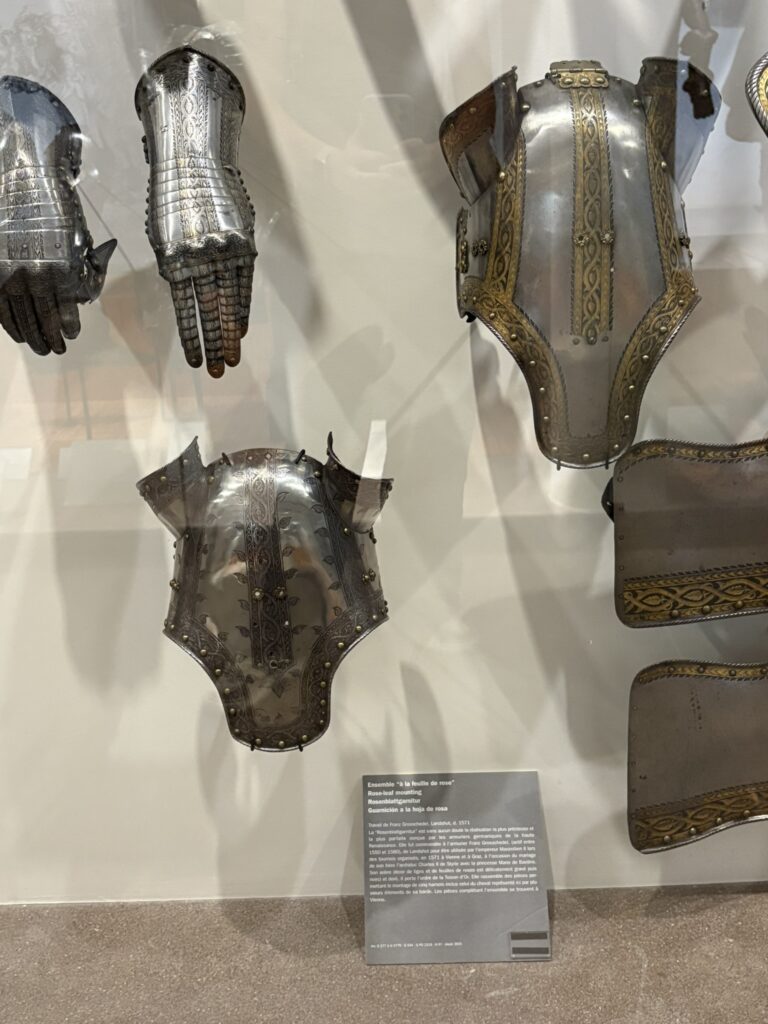
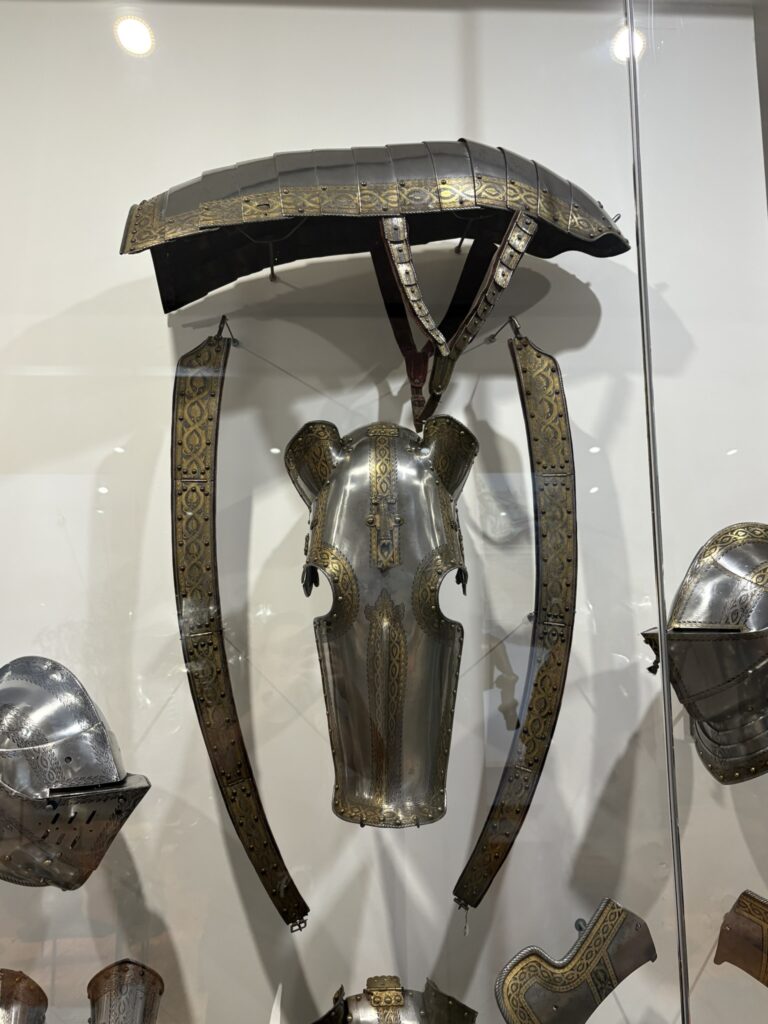
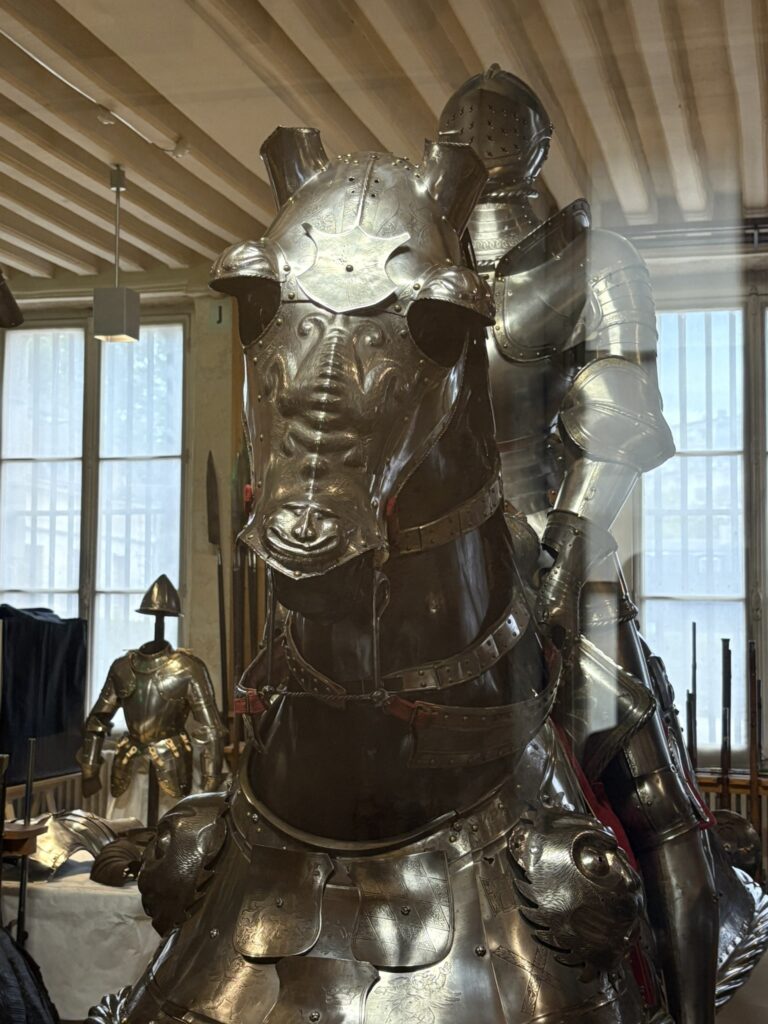
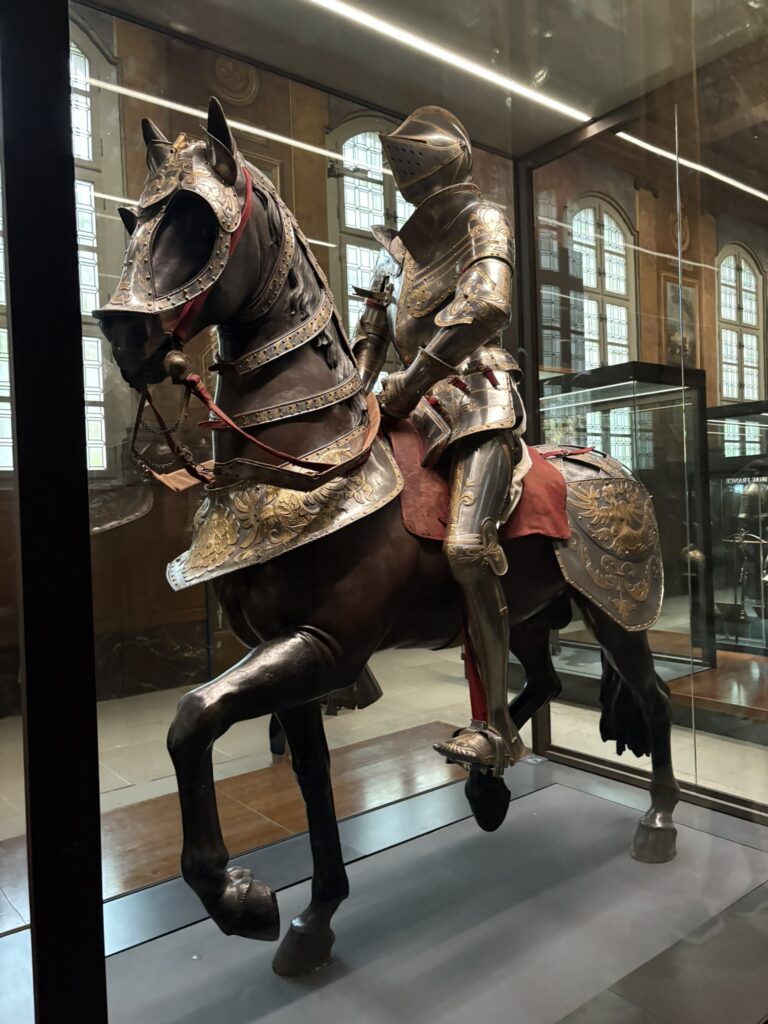
When I learned we were going to visit the Museum of the Army, I was quite indifferent to the idea. I have never been one for military history, and American military museums are often one-note, focusing on the same aspects of American wars. What I had been forgetting was that French military museums would feature some of the coolest aspects of military history: ARMOR. When I walked into that first room to a complete set of horse battle armor, I realized this wouldn’t be a boring visit.

King Ferdinand I’s Horse Barding

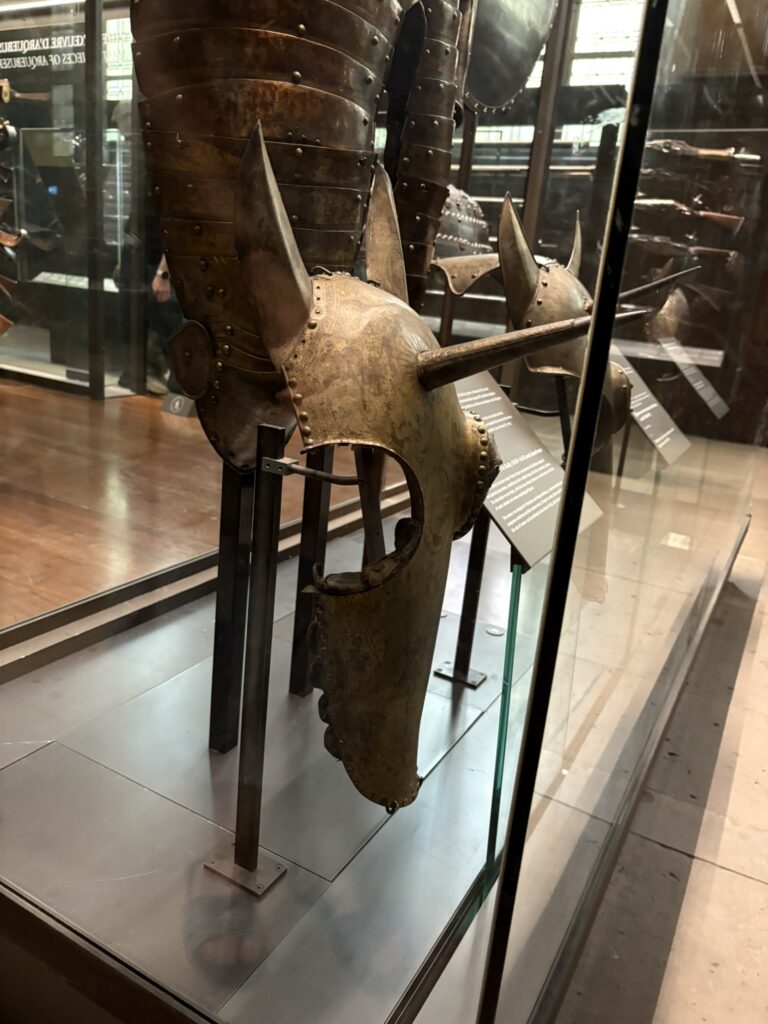
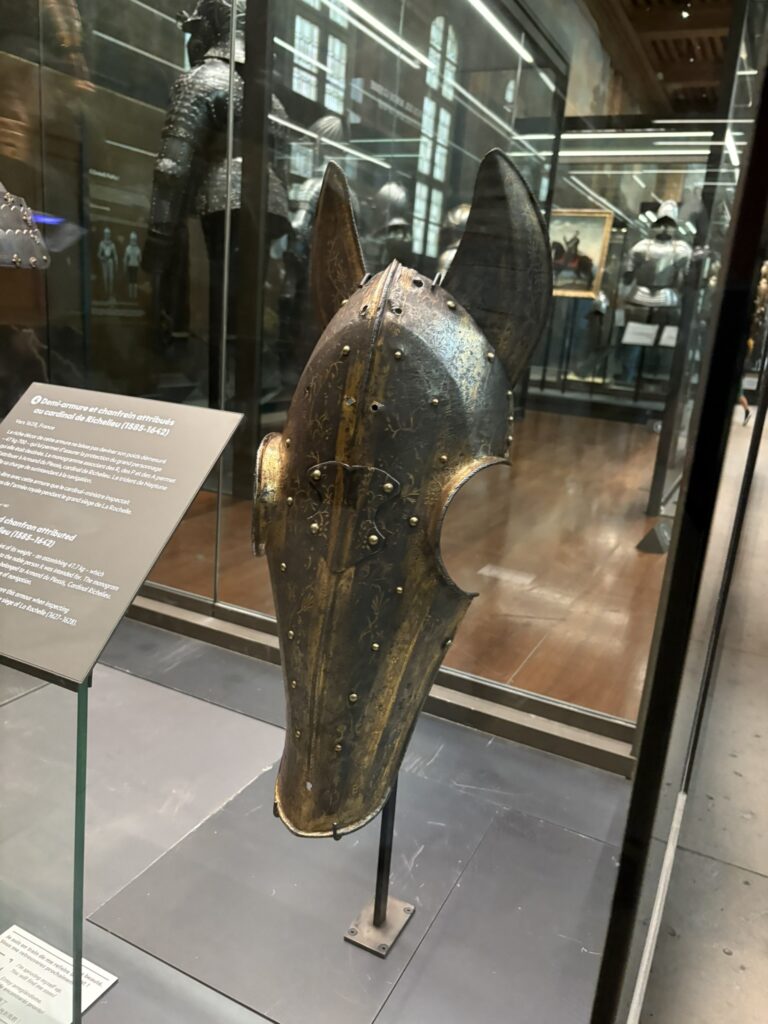
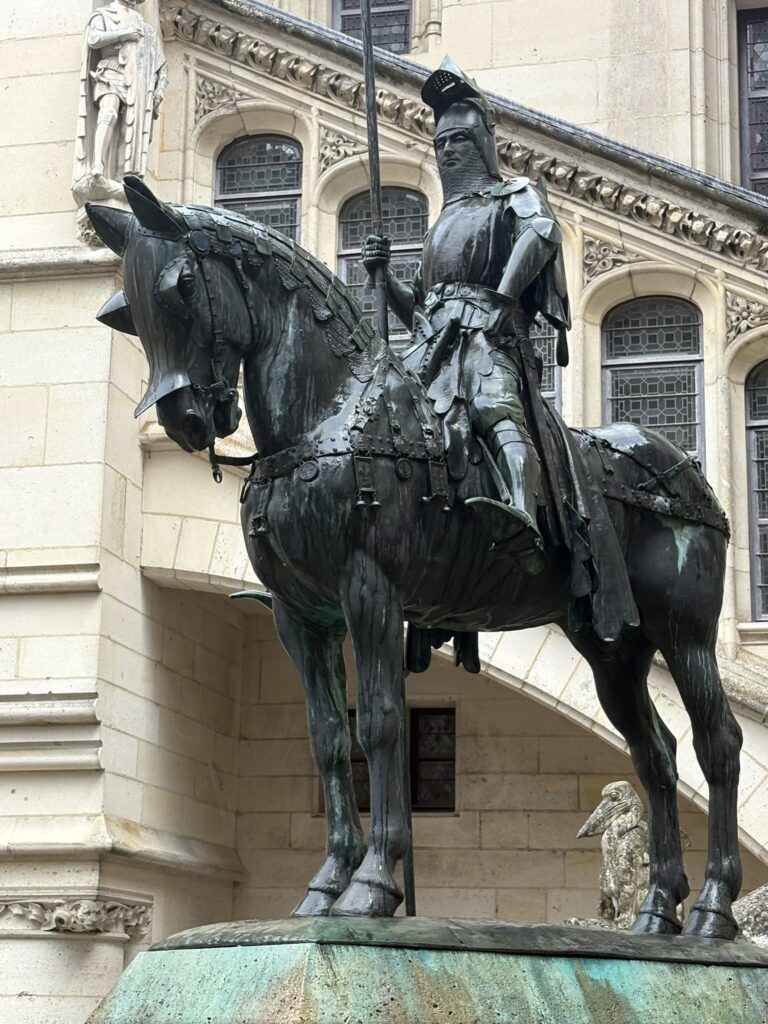
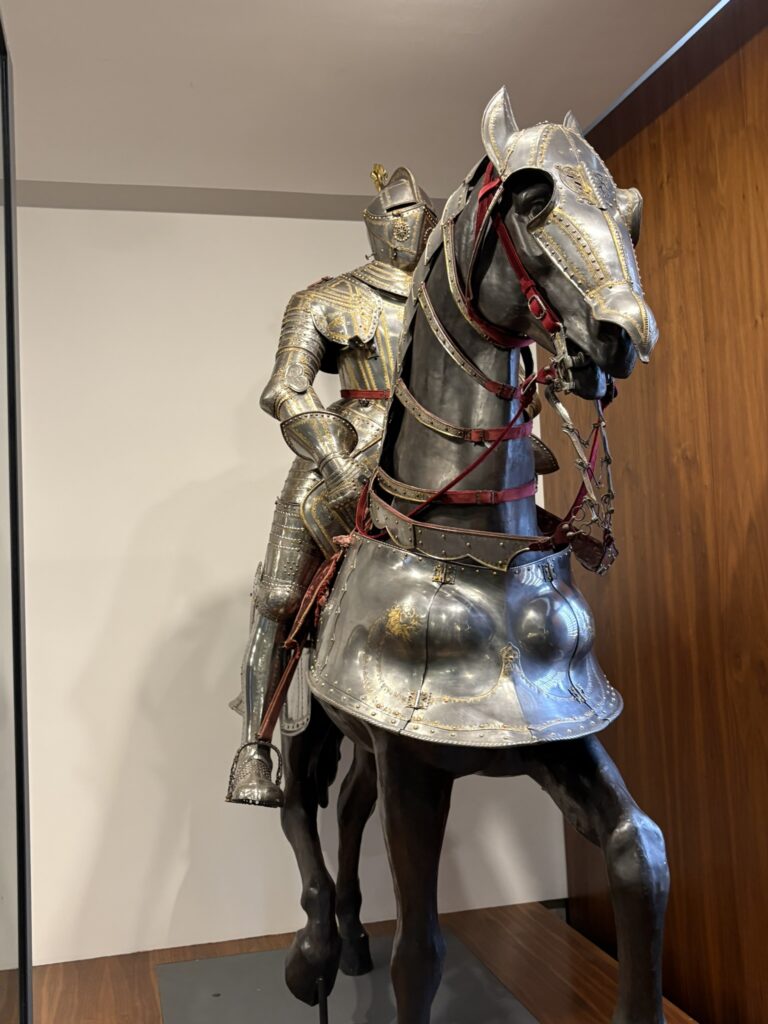
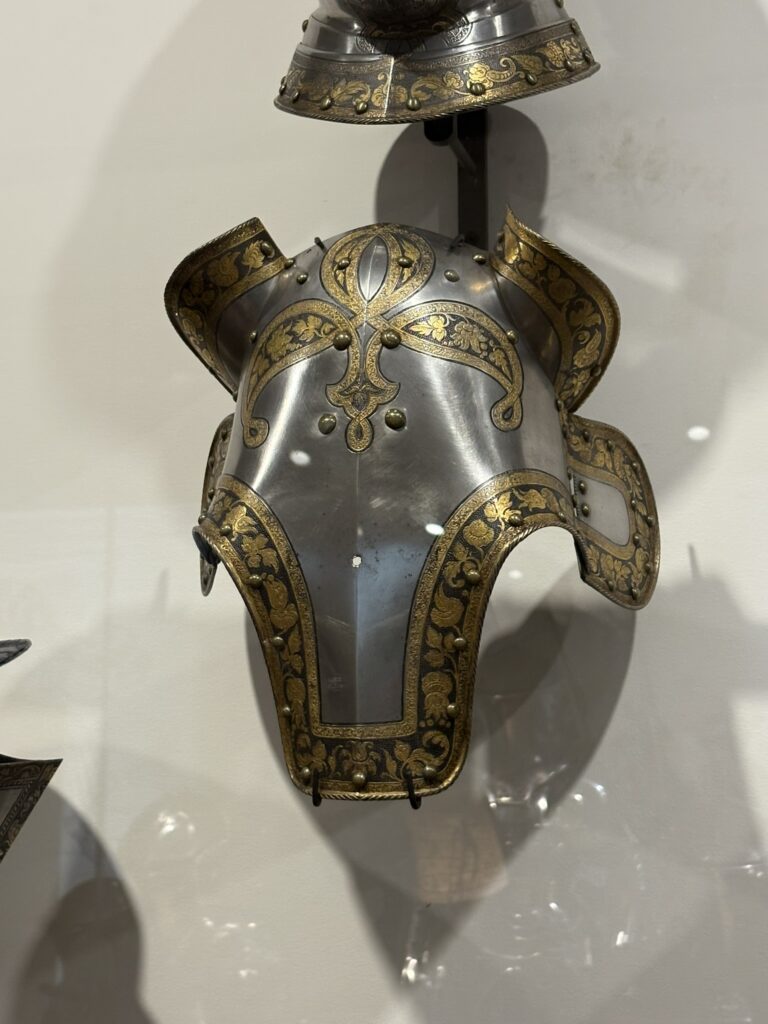
Horse armor, or barding, is not an aspect of equestrian history I knew about before this trip, but after visiting many well-outfitted horse statues, I have done some research I hope to continue to build on. The aspect that has interested me most has been chanfrons, the armor that decorates and protects the horse’s head. The museum had a large collection with a wide variety of shapes and styles. The collection displayed barding from across many eras of mounted warfare and  even different cultures.

Most feature extra metal and protection at the center of the forehead, between the horse’s eyes, the point most vulnerable when charging an enemy on the battlefield or when jousting. In some cases, it is a flat, decorative plate; in others, it is a spike sticking out that makes the horse look like a unicorn. Many chanfrons also have blinders over the eyes, which serve many purposes, including protection, shielding from dust, and limiting the horse’s field of vision. Because horses are prey animals, blinders can prevent them from panicking in the field of battle as they have to charge enemies. Blinders live on today in thoroughbred racing masks and driving horse bridles, used for similar purposes to the original blinders on chanfrons.

The nose is the other most vulnerable part of the horse’s face, a thin bone that has little protection. Many of the shorter chanfrons would have a second piece that could be attached to protect the nasal area. The nose cover often adds a dragon-like effect to the chanfrons, making the horse more intimidating. The ears are covered to dim the cacophony of battle as well as enlarge the size of the horse’s face.
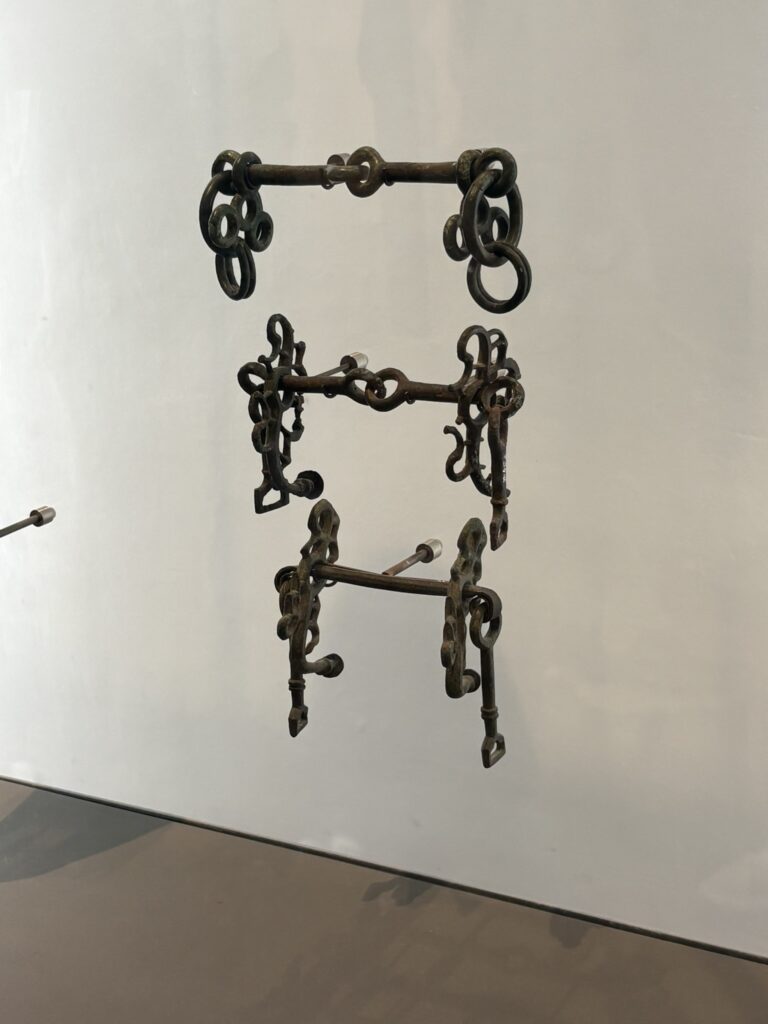
Now on to a topic I do know a good deal about, bits and other accessories. A bit is the piece of metal that sits in the horse’s mouth, used for steering the head of the horse and controlling pace. It’s fascinating to see that most of the bits they had on display were curb bits, which means they use a lever action to apply pressure from two points. It’s hard to describe, but the bit is connected to two reins on each side (reins are the leather straps that the rider holds to steer), one on the top directly next to the bar of the bit, the other connected to the bottom, creating the lever action. Bits of this nature were crucial to mounted military advancement, as the rider could have more control of the horse while only using one hand. Unfortunately, that control comes from the severity of the bits used, a reason bits like these are rarely seen today. The curb bit does still exist in an evolved form, but most associations have strict regulations in place on its use. They are seen in the dressage discipline, which relies on high levels of control between horse and rider and was developed from military training and routines. As a person who has had to use double reins, it is a lot to manage, and I cannot imagine doing all that while also swinging a weapon around.
While this has mostly been me rambling for too long, there are some incredible sources of research done on this topic, such as the Warhorse Project, and great places to learn more if you are interested. And there are so many other amazing suits of armor in the museum that display all different periods of barding, designed to fit different styles of warfare. It was very fun to see the armor up close after seeing depictions of barding on equestrian statues across Paris.

Joan of Arc: The True Horse Girl

As I have accompanied Ellie on her quest to find the most historic clocks in Paris, I have visited many churches. It’s astounding the number of churches I have been to in the past few weeks, probably more than I have been to in the last five years. As a non-Catholic person, my only connection to churches is to simply admire the beautiful architecture and decoration. Some of the most beautiful buildings I have been in have been Catholic churches scattered throughout Paris. To make my visits more fun, I’ve created a little game: find the Joan of Arc statuary.

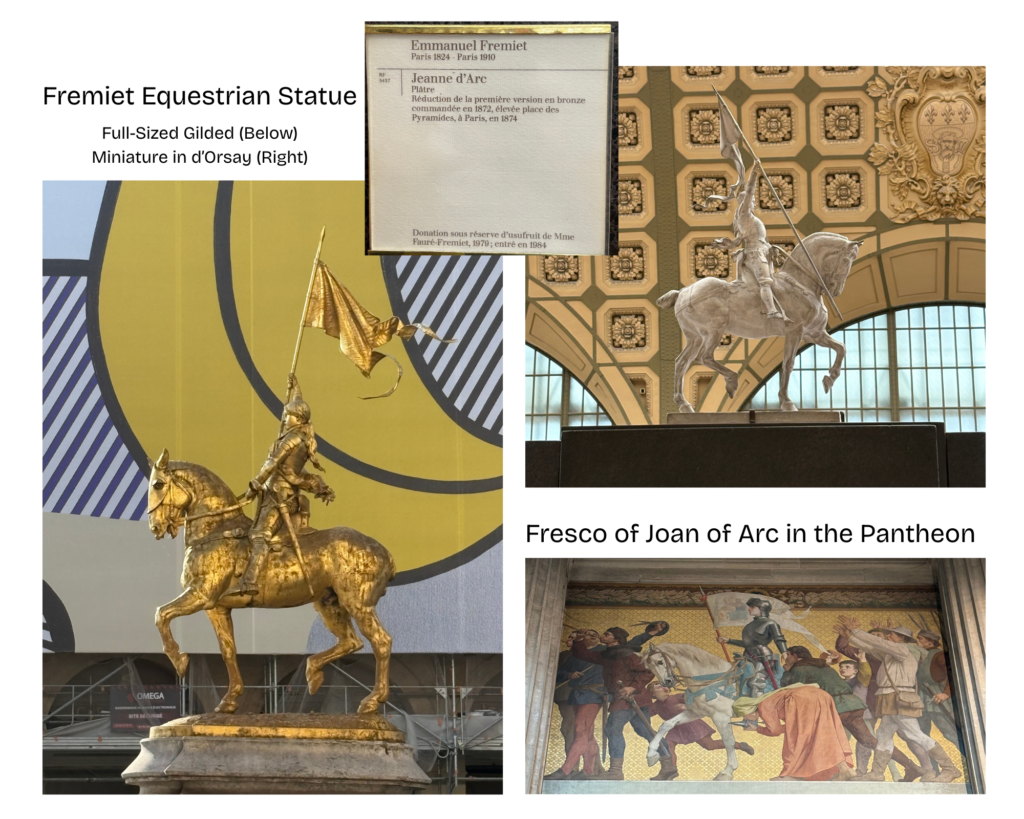
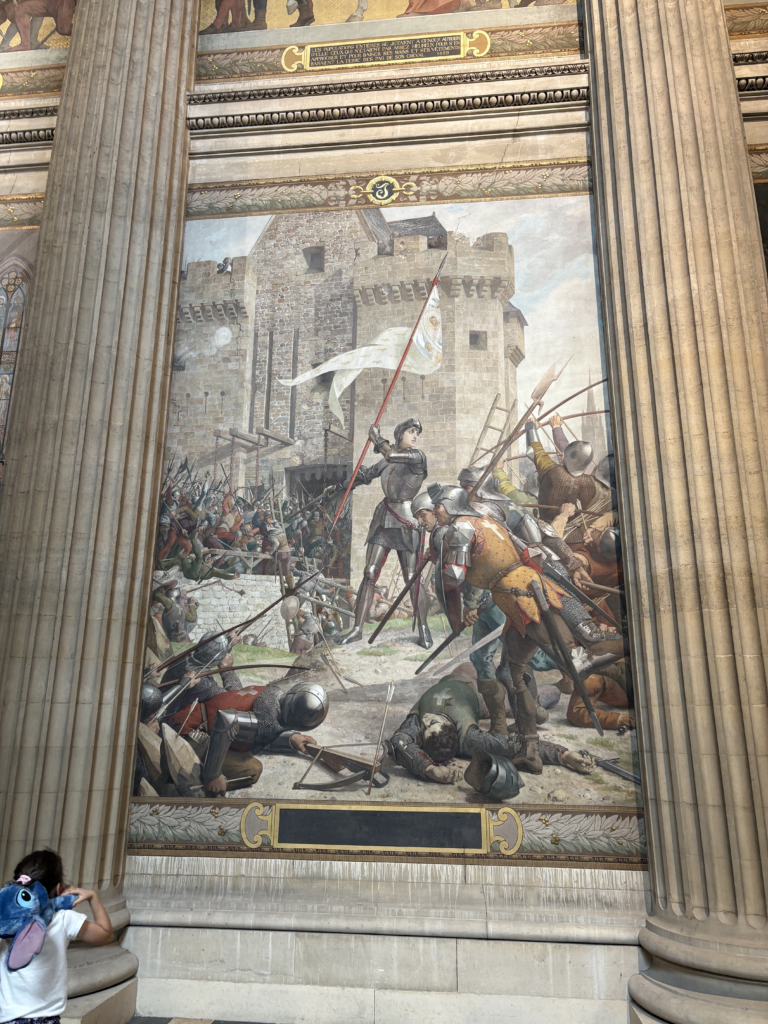
My interest in Joan of Arc depictions in Paris began before our trip started, as I researched various equestrian statues in the city. The statue I was most looking forward to visiting was the golden Joan of Arc equestrian statue located near the Tuileries Gardens. This 1874 statue, created by Emmanuel Fremiet, is one of only two equestrian statues of the saint in Paris (the other is located outside Sacré-Cœur, which we haven’t visited yet), and is notable for having a miniature version on display in the Musée d’Orsay. The dynamic nature of this statue makes it so lifelike and breathtaking, featuring Joan holding a striking and confident pose, and the horse depicted in precise movement. Her presence on a horse is so symbolic of her respected position in French history, as horses have traditionally been used as a status symbol for figures memorialized through statues. She is also featured on horseback in the fresco above the series of paintings telling the story of Joan of Arc in the Pantheon. It was this early observation of the female saint on horseback that piqued my original interest due to the uniqueness of the occurrence.

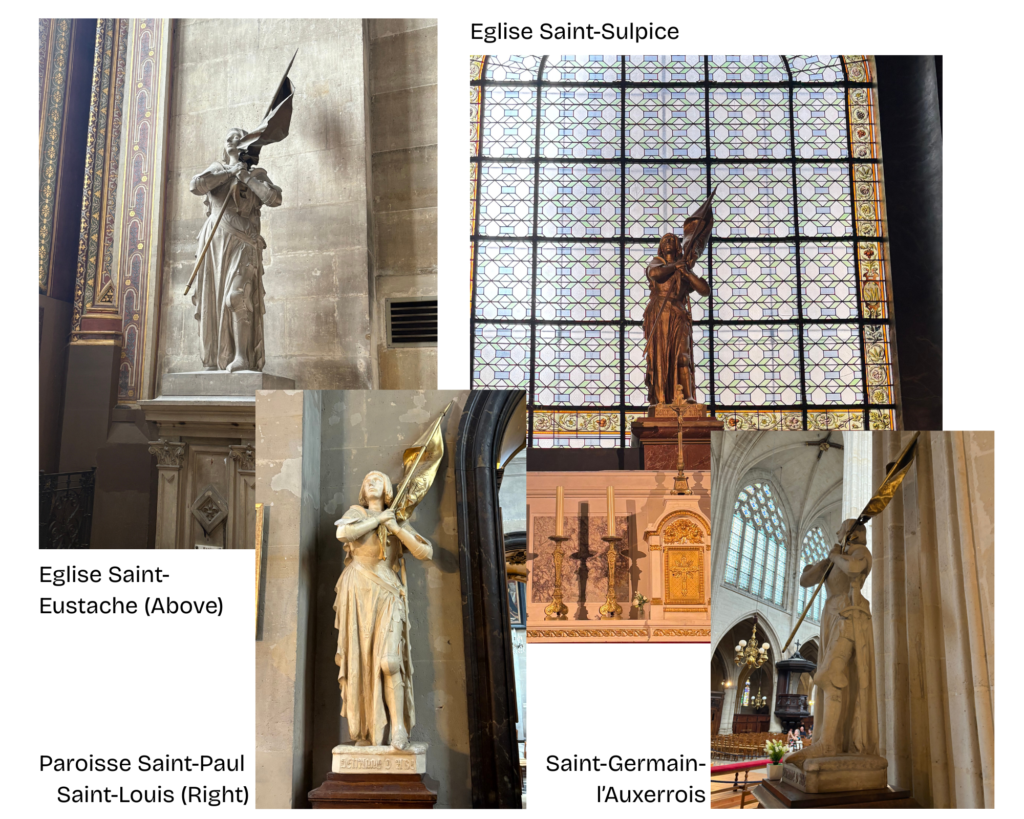
Long-winded tangent on equestrian statues aside, I slowly began to notice Joan of Arc more around the city, particularly in churches. While there are many statues dedicated to female saints in all the churches, Joan of Arc is the most depicted woman (outside of Mary, the mother of God). I would have guessed that Saint Guinevere would be most prominent due to her connection to the city of Paris, but the well-known story of Joan and her role in French history must have had a large impact on the Catholic Church in Paris. She is easy to pick out, with her armor and bearing of the French flag. Her sword is also always attached to her hip, but almost never drawn in the depictions I have seen. The sword seems to be a decoration while she leads with her passion and ability to rally the troops.

The stance most often used features Joan holding the flag to her heart, with the flag softly draped on her shoulder, and her left leg slightly forward, exposing her armor. I have seen this exact pose in multiple churches, including Paroisse Saint-Paul Saint-Louis, Saint-Germain-l’Auxerrois, Eglise Saint-Eustache , and Église Saint-Sulpice. I am unsure which statue is original, but it is safe to assume that they are all replicas of an original statue. This depiction emphasizes Joan’s intense love for France and her preference for using words over her sword, which is fitting for inspiring devotion among the congregation members. There is an interesting use of gold in the different statues, with some, such as the one in Église Saint-Eustache, using no gold, while the Saint-Sulpice statue is entirely gilded. My favorite is the limited use of gold, reserved only for the flag, adding an interesting dimension of significance to the statue.

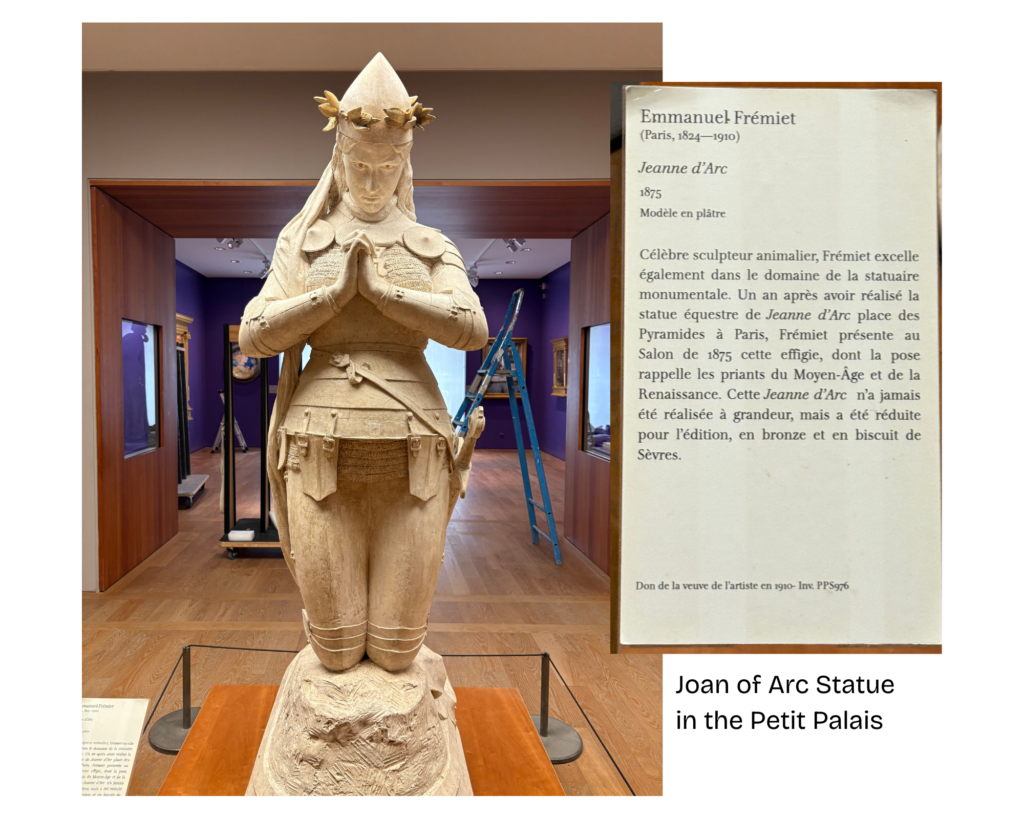
I also ran across a statue of Joan of Arc in the Petit Palais, this time in a position of prayer. The flag is on the ground underneath her, and her head is bowed. Also made by Fremiet, a year after the equestrian statue, this plaster model was never made to the full size as intended, but was meant to emulate the prayer style of the Middle Ages and Renaissance. The headdress is unique to this piece, appearing as a crown of florals, perhaps representing laurels that symbolize prosperity and peace. Overall, it is an interesting contrast to the previous Joan statue created by the artist, which depicts the saint as both a confident, horseback-riding leader in battle and a girl devoted to God above all else.

This contrast is interesting to examine in the context of modern symbolism associated with Saint Joan. She is simultaneously representative of feminism and purity, two ideals that are often seen as opposites. Unfortunately, many right-wing groups have clung on to Joan’s status as a virgin until death, praising her purity and French nationalism, neglecting the other key aspects of her story. On the other hand, feminist groups often rally behind Joan of Arc, seeing her ambition and confidence as something to be praised and followed. She has been used as a figurehead throughout history, most interestingly in the suffragist movement of the early 20th century. The conflicting narrative surrounding Saint Joan is compelling to research and interesting to project onto her depictions across Paris, as she is represented in a broad spectrum of interpretations. As I continue to visit more churches, I am excited to try to spot more statues of Joan of Arc.

Metro 4: My Favorite Line

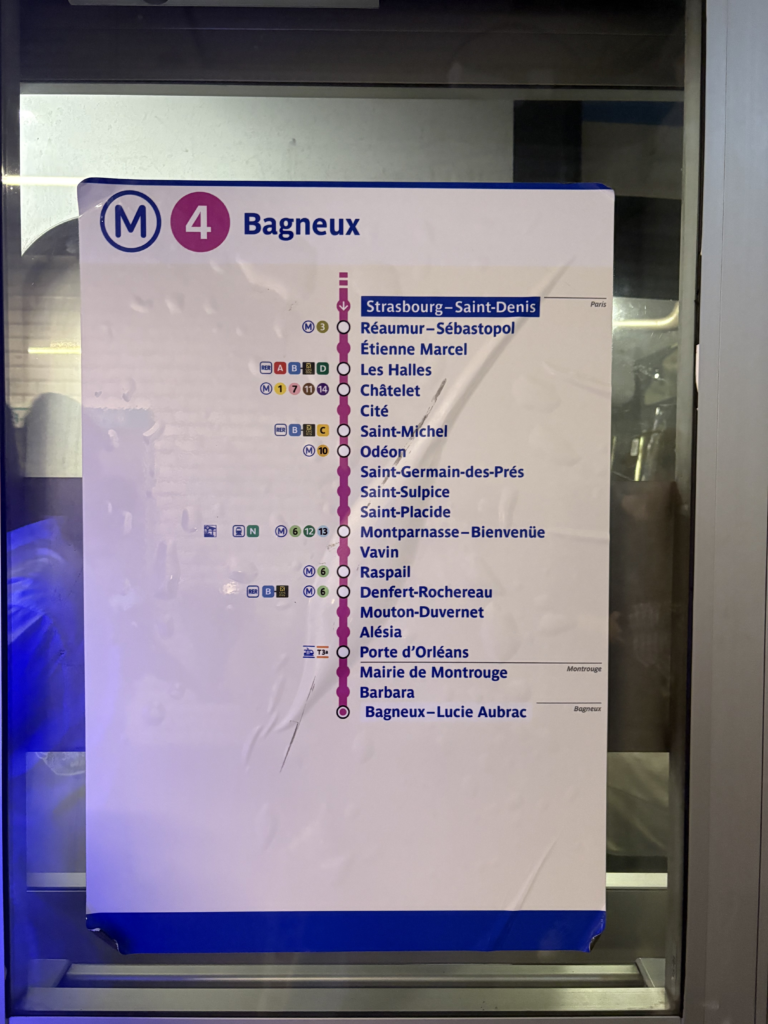
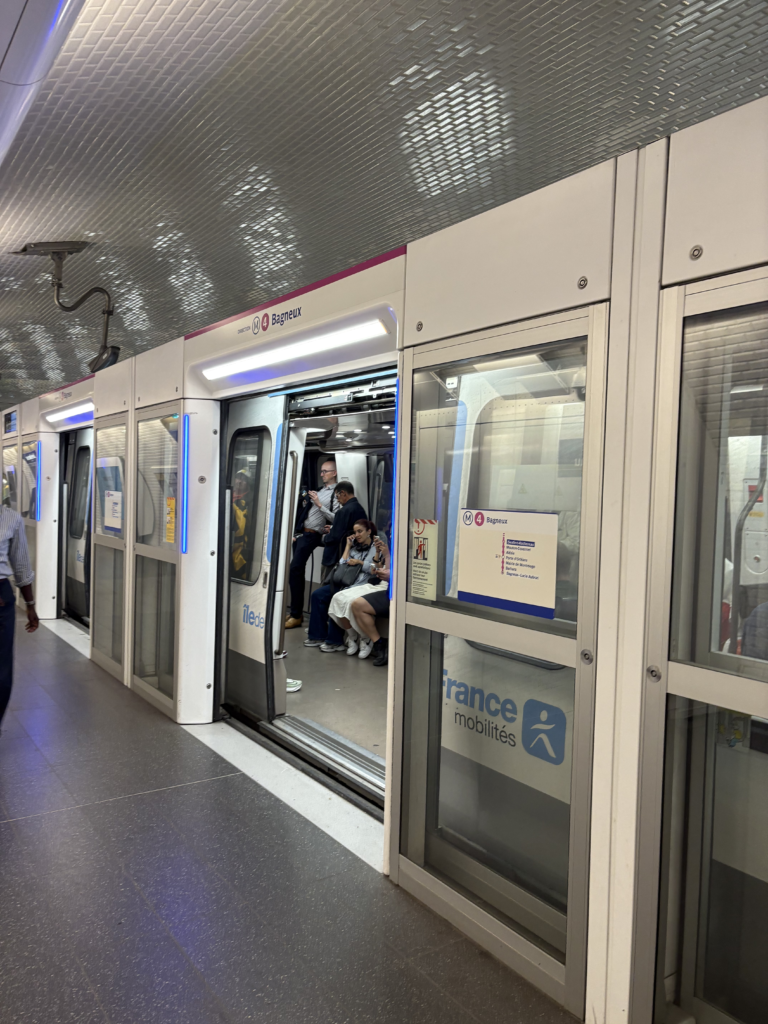
It was a wonderful Tuesday morning when I looked up directions on how to get to our destination for the day, the Musee d’Orsay, and a beautiful message appeared. Metro line four was reopened, a first during our time in Paris. Over the previous two weeks, all signs for the four were covered in red tape, and I only had a vague idea of where the line even went, with only the barest notion that it was causing the RER B to be slightly more crowded. Upon boarding the train and examining the stops, I began to understand why the B had been so crowded, as the two lines largely followed the same path in the city. Thus, I began to appreciate the wonders of a redundant transit system fully.

Metro Line Four Stops

The hub-and-spoke system commonly found in American cities pales in comparison to the layered, redundant Parisian system. Washington, D.C., a cute design a toddler could come up with; New York City, good luck trying to get to the right place when a line is closed. The Interconnected nature of the Paris public transit system allows the lines to be shut down for repairs while still providing alternative routes and means of getting around the city for those who depend on public transit. Summer is a major time for work to be done on the transit lines, so I have been seeing closure signs throughout the city, but the transit authorities have mitigated the consequences of shutdowns in many ways:

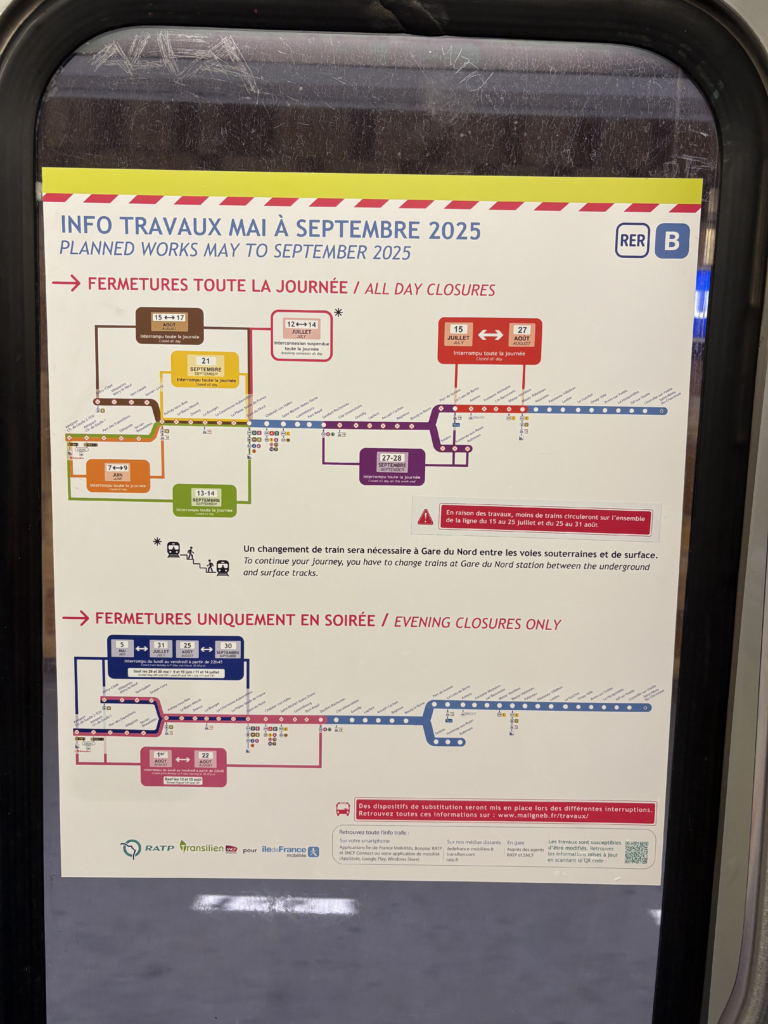
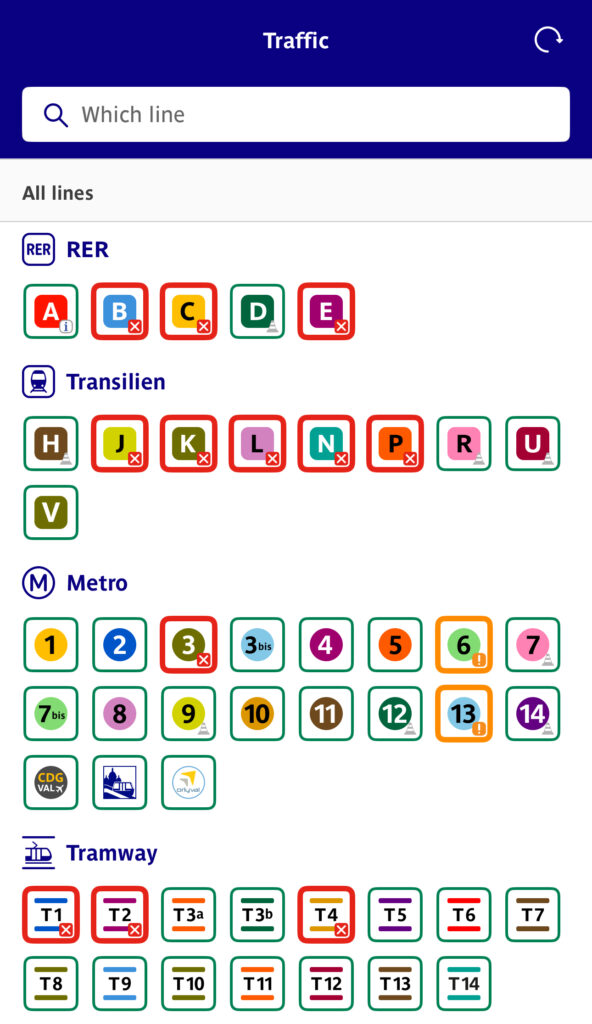
Notices are posted around the stations and in the trains themselves, listing all the closures occurring within a given time frame. Currently, the trains are displaying closures from May through September, giving passengers ample notice of when closures are expected. The signs on the train only announce closures for that line, making them easy to understand and not overly complicated. Closures are also available to view in the RATP app, allowing passengers to get a good sense of closures throughout the city without needing to visit the station itself. I find them a great thing to look at to avoid staring at other people!

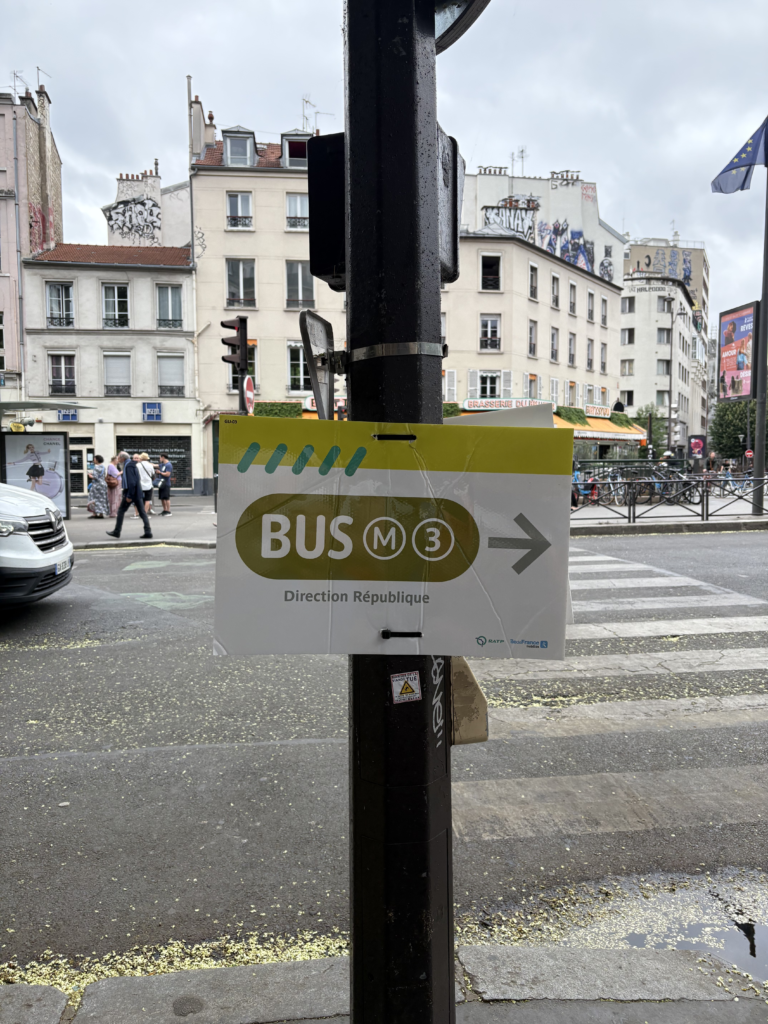
Bus alternatives are also provided to allow passengers not to have to go out of their way to find an alternative route; instead, they can take the same path, albeit on the surface. Because the metro system is built following the roadways, it is easy to replicate the path in a bus form, the only downside being that it may take slightly longer.

Sign for Alternate Bus Route

Announcements are also given at the stations where you can connect to closed lines, informing the listener that the line is under construction. The announcements are given in both French and English, which is great for tourists who are already struggling to navigate a new transit system and may not be aware of line closures. They also occasionally provide insight into what other lines are available to take to get to the same destination. Along the RER B, many announcements advised taking the B from Denfert Rochereau to Les Halles or other similar stations due to construction on the 4.

I saw how important the existence of redundant transit systems was when both options for travelling were down. During my return from a weekend trip to Normandy, while the Four was under construction, RER B had severe delays due to the presence of people on the tracks between Gare du Nord and Les Halles (where we were getting on). We had no idea if the train was coming, as the board indicated the next train would arrive in an hour and six minutes. As I checked my phone for other routes, I realized that the usually fifteen-minute ride would be more like forty-five minutes to an hour, taking an alternative route. Luckily, a train did come, packed wall-to-wall as can be expected, but as I rode the Metro Line four the next day, I realized that the problem would have been largely non-existent if the four was operational, as I could have just taken that train instead of waiting for the B. It made me truly appreciate the flexibility and options available with a redundant transit system.

New Station For the Updated Metro Line Four

It’s like the trains were smiling with the reintroduction of the four, as on Tuesday, July 15th, all my trains were on time and barely crowded. Of course, my luck returned to normal in the following days as RER B encountered new problems and more delays, but for a day, public transportation was never better.

The Pantheon: Comfortability in Spaces

The Luxembourg Gardens are one of the most comfortable places I have visited in Paris, allowing me to relax and feel at peace amongst the crowds of the city. This got me thinking about the comfort of spaces and what makes those places stand out.

The gardens themselves are a fascinating study of dividing space into different uses, holding spaces with contrasting levels of comfort. The central French-style park exerts the power of its benefactor, Queen Marie de Medici, and provides a space for a bit of discomfort in front of the palace. There are few trees to provide shade, and the perfectly manicured grass feels wrong to step on. This feeling is contrasted in the shady lawns near the south entrance to the park and in the English gardens that provide more peace and relaxation as opposed to displays of sheer power.

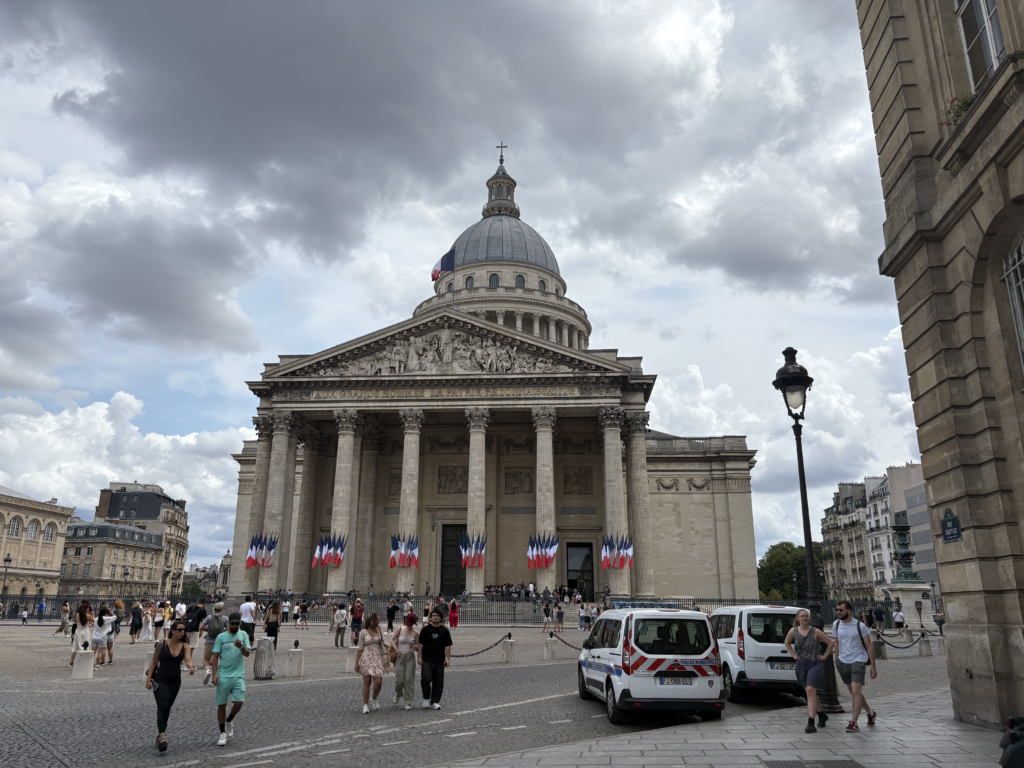
Later in the day, we went to another comfortable place, this time a building, the Pantheon. Upon entering the Greek temple-style building, I was surprised by the lightness and ease of being in the hall. I was expecting the space to feel like the other churches and historic structures we had been in, oppressive and uncomfortable to be in. On the contrary, the Pantheon felt easy to be in, managing to be impressive without being intimidating.

The history and intent behind the creation of the building could be related to the feeling it exuded. The church was built to honor Saint Geneviève, Paris’ patron saint, which can explain why the building feels welcoming and homey, as it is meant to worship the saint who protects the citizens of Paris. I believe this temple has elements of a building with architecture parlante in mind, trying to portray the building’s purpose as a sanctuary for the people of Paris through its design.

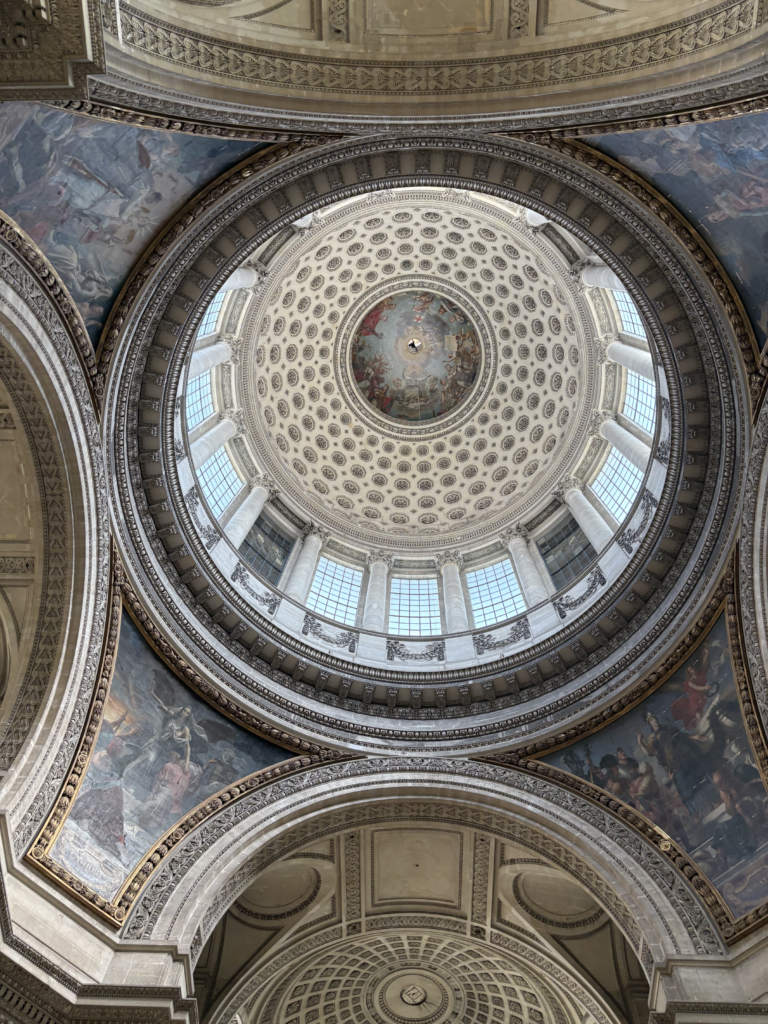
Triple Dome in the Pantheon.

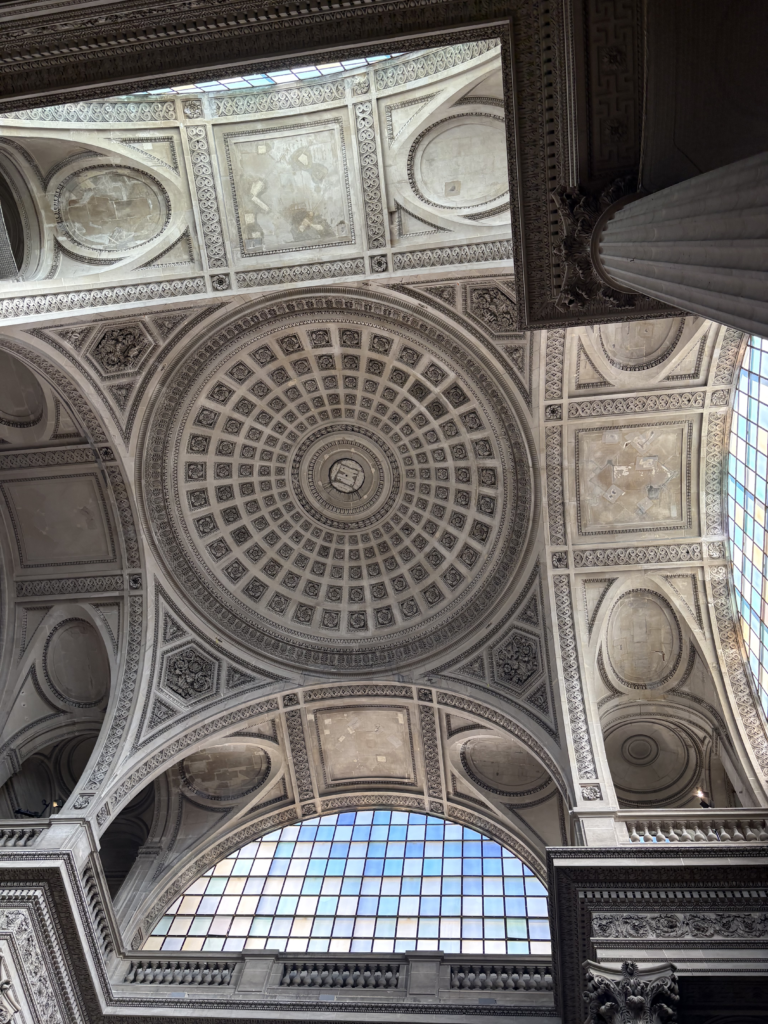
The design itself allows for lots of light to enter the building, with a triple dome in the center of the Greek cross plan temple. The lack of dark-stained glass, like what is seen in Sainte-Chappelle, and instead opting for clear or heavily translucent pigmented glass allowed for the building to get good lighting without needing artificial light to illuminate the space. The building strays away from dark colors, focusing on brightness, even in the artworks scattered throughout the temple.

Light Stained Glass.

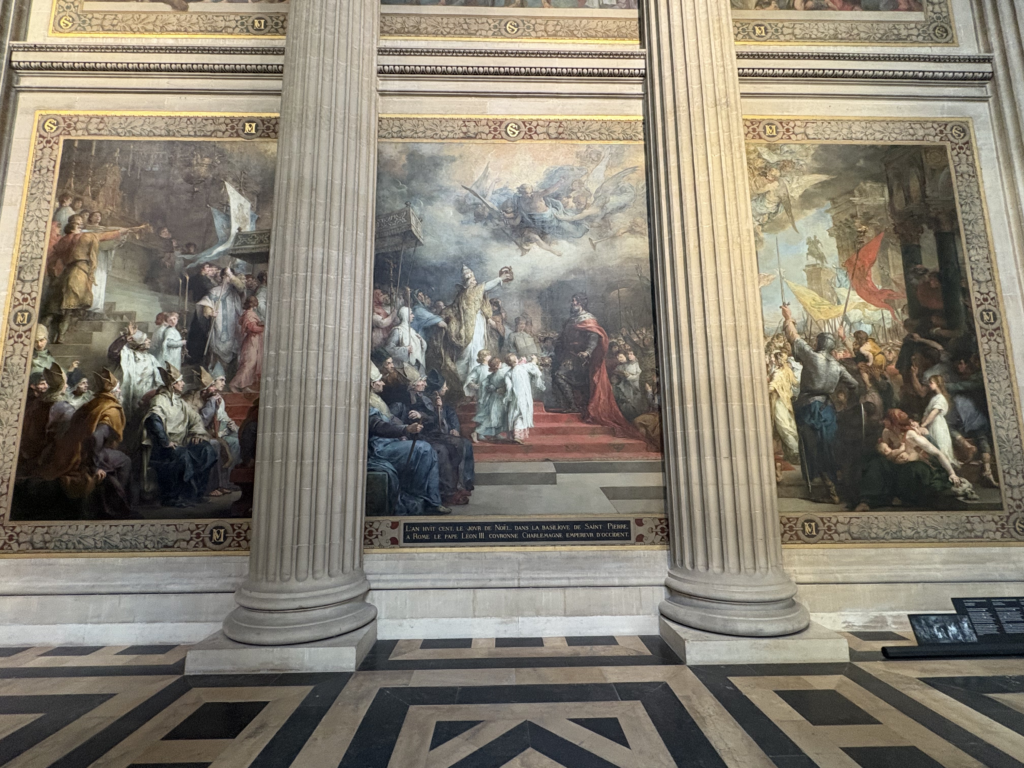
The art is another aspect that makes the Pantheon feel comfortable to be in, packed wall to wall with depictions of the lives and triumphs of legendary figures from France. The depiction of the story of Joan of Arc is one of the most outstanding parts of the building, filling the wing with amazement, as her story is brought to life through light and vibrant colors. The larger-than-life art of Charlemagne and Saint Geneviève also gives life and comfort to the building, depicting the successes of familiar figures in Parisian history.

Overall, through its design and composition, the Pantheon has been one of the most comfortable and easy spaces to occupy, a wonderful contrast to the dark, oppressive nature of many other fantastic sites we have visited. I spent almost two hours just sitting and taking in the artwork and atmosphere of the church, making it a highlight of the places we have visited.

Palais Garnier: Ceilings! Mosaics! Lighting!

The national Opera house of Paris far surpassed my already high expectations, being one of the most jaw-dropping, stunning buildings I have seen thus far. Seeing the architectural inspiration for the award-winning Phantom of the Opera was very exciting, as the Broadway musical is one of my favorite stage productions.

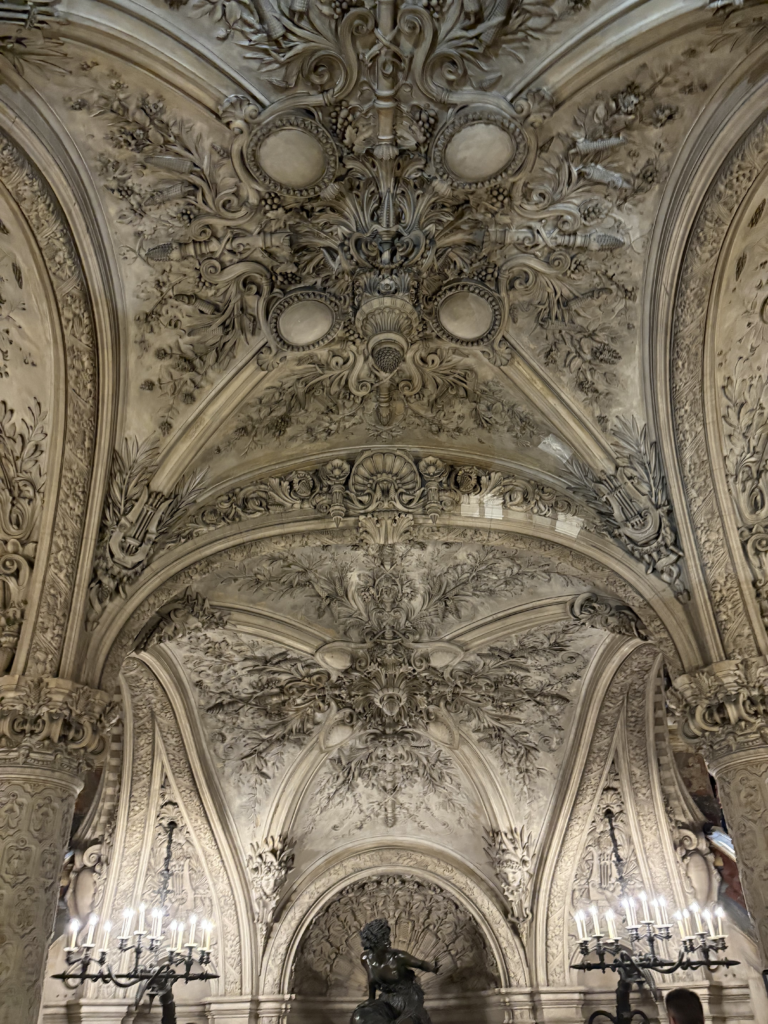
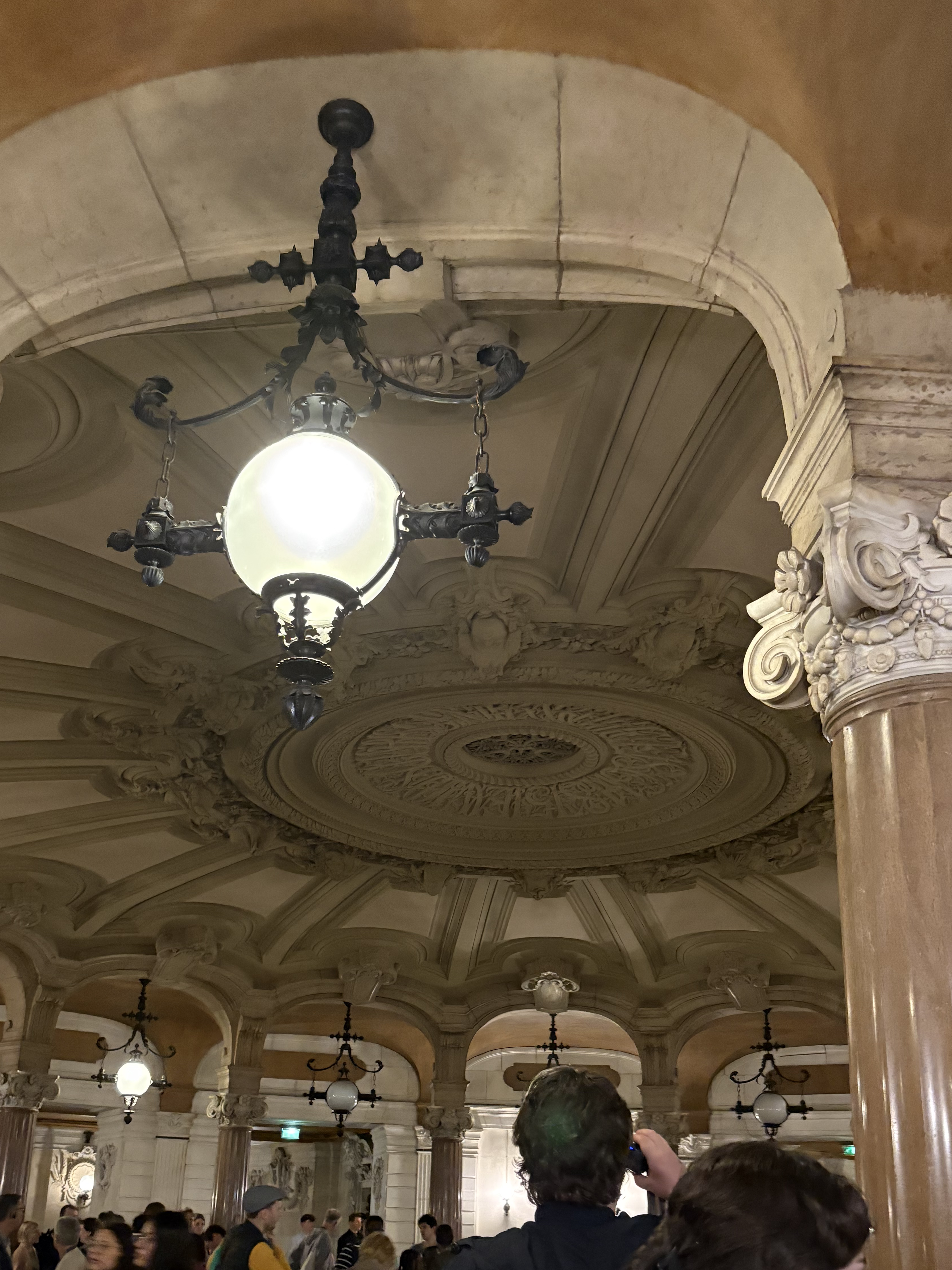
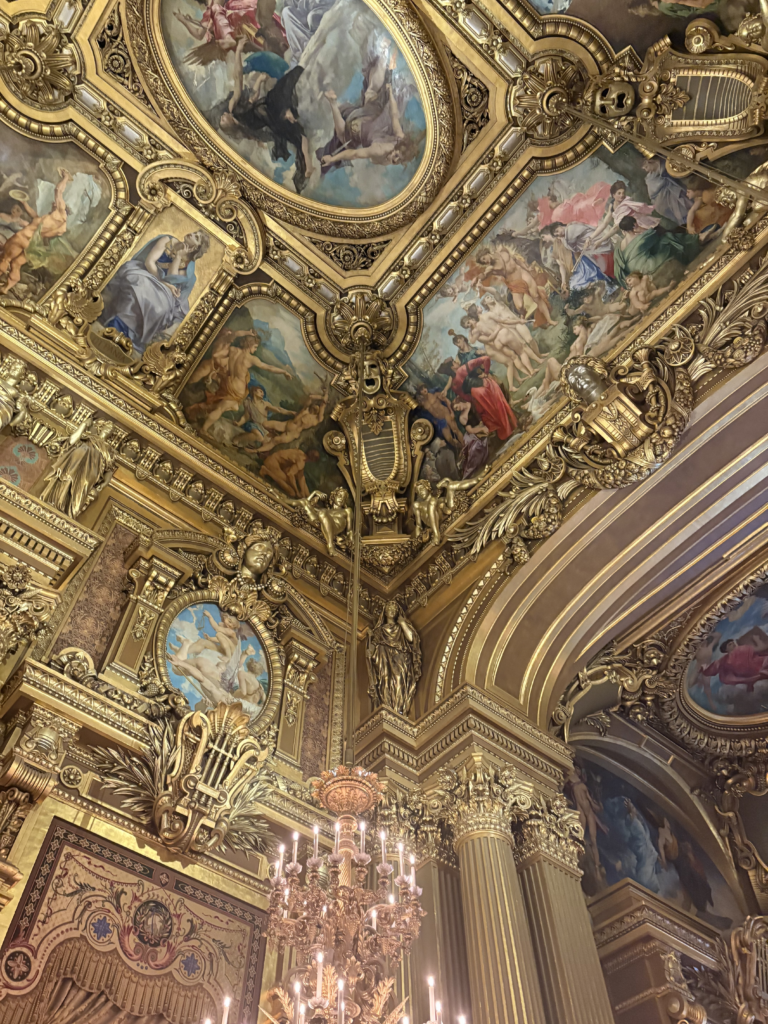
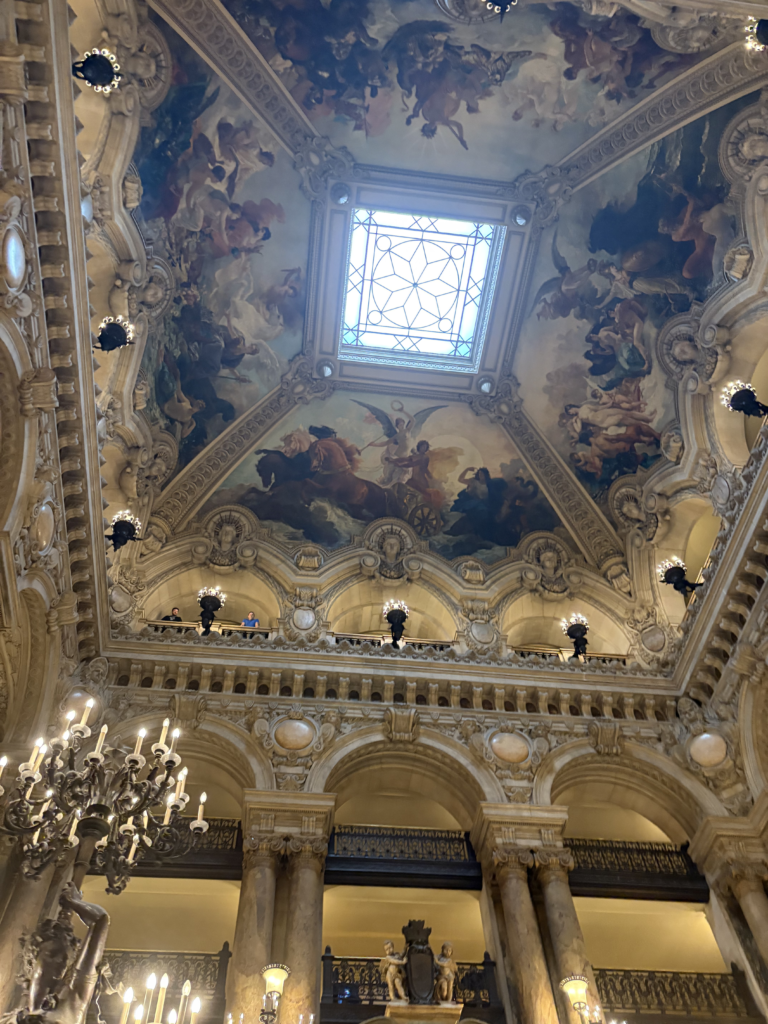
The start of the visit was a bit underwhelming as we walked out of the metro station, and the façade was covered in a Nike ad. Paired with a sudden downpour as we waited outside, the beginning of the visit was off to an interesting start. As soon as we entered the first chamber, I was instantly in love with the over-the-top ornamentation and grand atmosphere. A combination of the ornate ceiling, beautiful wrought iron lights, and stunning tile work made the space feel luxurious to be in. The extravagance of the interior continued even in the quiet spaces, not meant to be on main display.

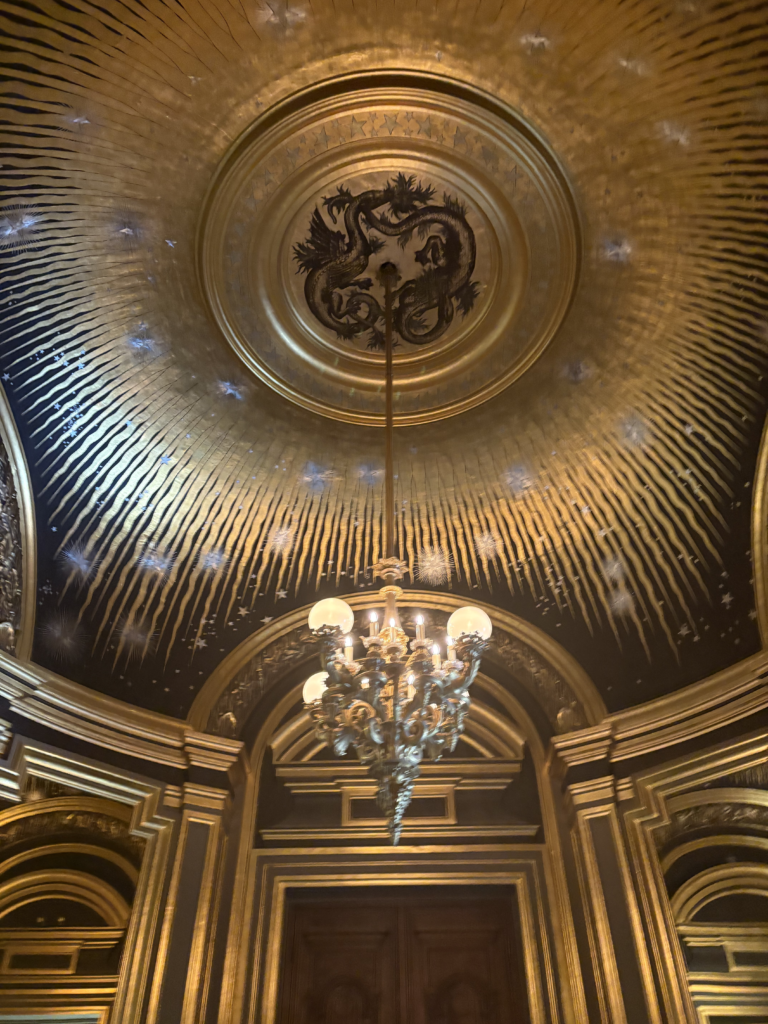
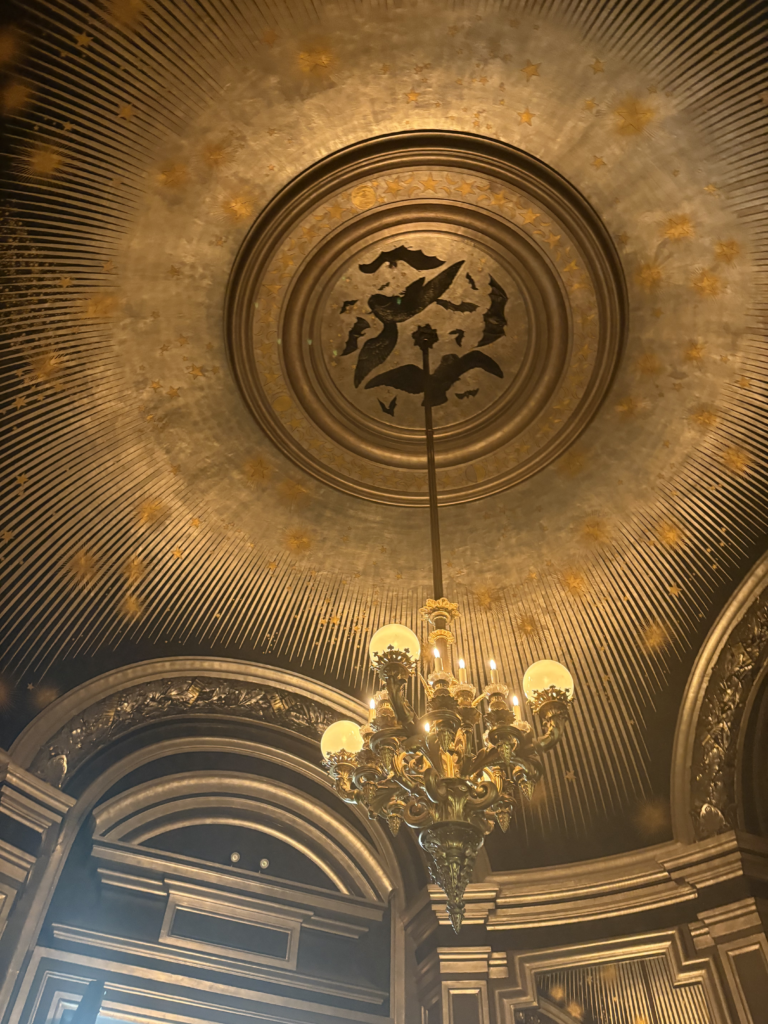
The ceiling of the opera house was an excellent extension of the Palace of Versailles that we visited over the weekend, and it surpasses the palace. Gold frames the wonderfully painted high ceilings, allowing the light to reflect and illuminate the room, and continues to elaborate on the importance of the buildings, providing the elite of Parisian society with rooms reflecting their opulence. The brightness of the room was contrasted with the Sun and moon salons that have dark coloring and accents of gold and silver, respectively. The darkness allows the rooms to feel more private and an escape from the overstimulating richness of the grand staircase and halls. The skylights in the ceiling make the space feel more open and airier, a technique that is later reflected in buildings such as the Pantheon and Printemps.

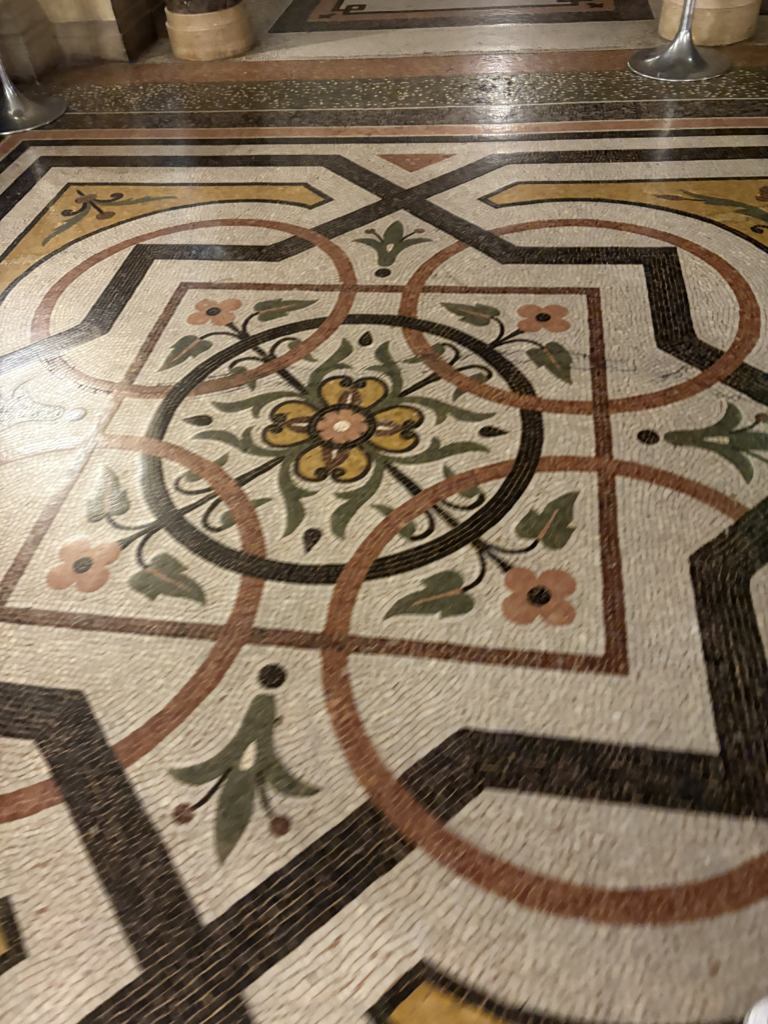
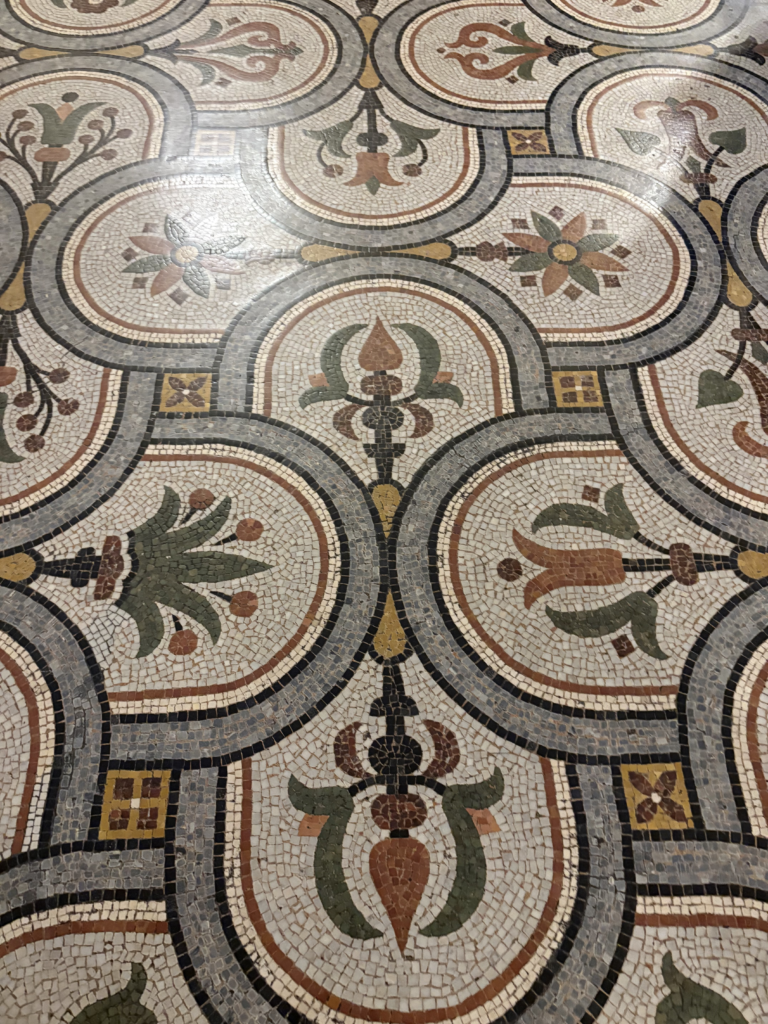
Arguably, the most beautiful aspect of the buildings was the stunning mosaics that filled the floors and ceilings of the opera. The patterns and images created using the intricate tiling elevated the luxury of the building, as the time and effort put into designing and installing the art were clear. In researching the mosaics, I discovered there was a fascinating process behind their installation. Garnier applied an Italian technique to make the process of installing mosaic more economical and efficient, by gluing the enamel to paper with the design on it before cementing the tiles into the ground. This process allowed Garnier to use more mosaics in the opera and create a masterpiece of a building that still amazes to this day.

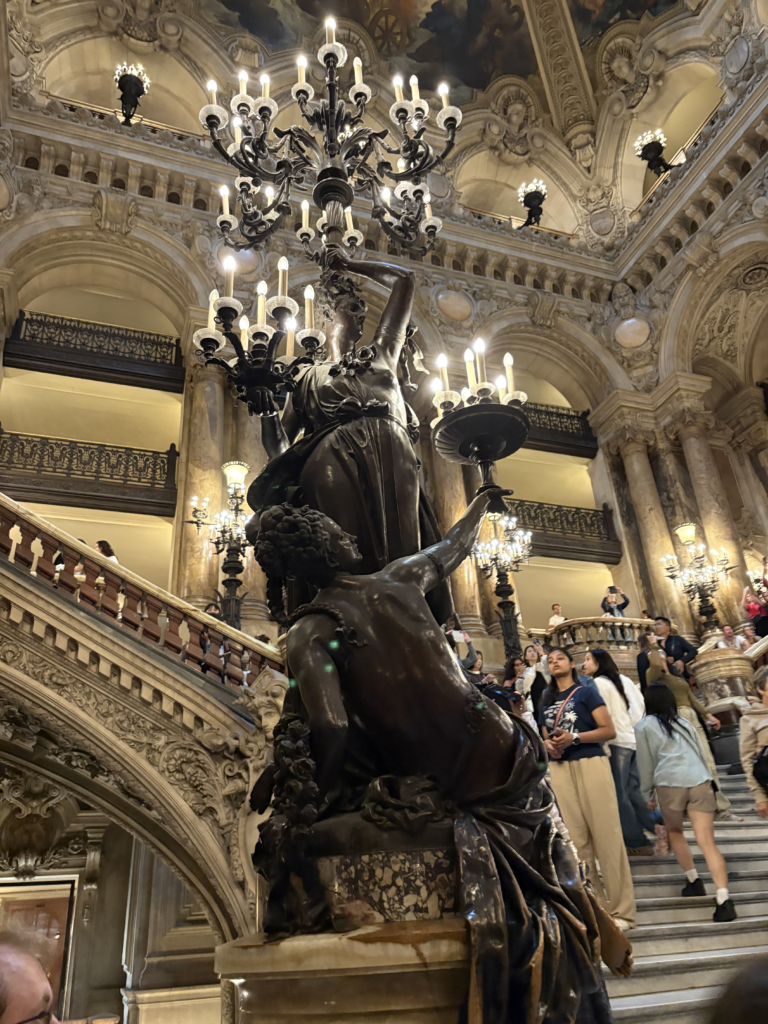
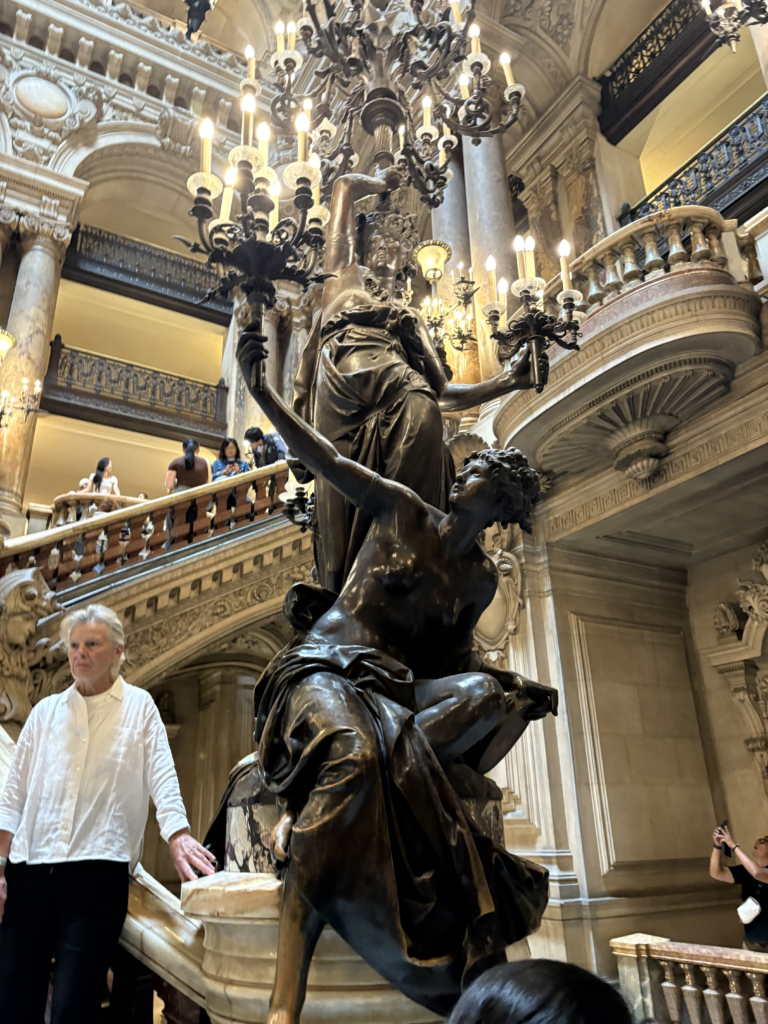
Finally, the lighting in the opera house was some of the most artful I’ve seen throughout Paris. Both inside and out, the wrought iron lighting features add a stunning and almost haunting atmosphere to the opera house. The grand staircase is home to two beautiful statues that serve as candle holders, both with two women in clothes from classical antiquity. These women hold the main source of light for the building during the night, symbolic of the female performers who would illuminate the stage during the shows and paying homage to the Parisians’ obsession with classical imagery. Though all electric now, it’s magical to imagine what the entrance hall would have looked like lit by real candles in the opening days of the Opera house.

Musée de Cluny: The Art of Inspiration

Starting the trip strong, the first three days included some of the best museums I have ever been to. The Louvre and the Musée de Cluny both showcase the long history of Paris, with a wealth of centuries-old art and architecture. Despite being “out of the timeline,” I found the trip to be a great setup for all the future eras and styles we will encounter throughout the trip, which makes me excited to revisit the gallery at the end of the trip. The French painting gallery in particular really got me thinking about historic French Art, leading me into my thoughts on the Musée de Cluny.

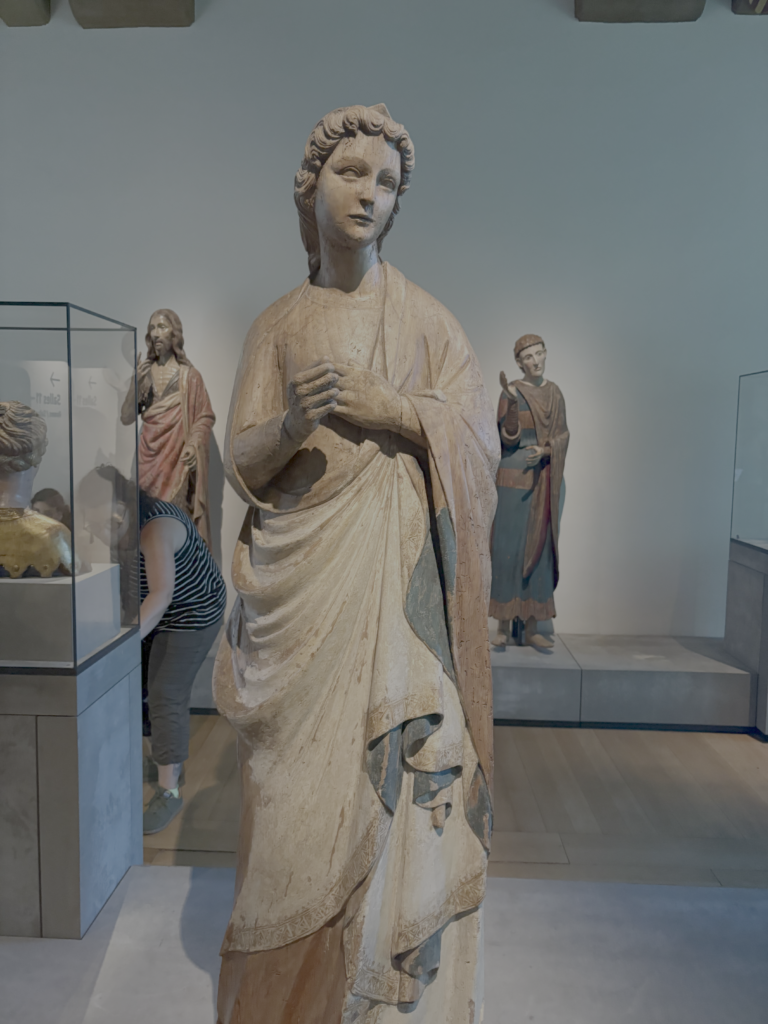
Statue from the Musee de Cluny.

The number of statues in the Musée de Cluny was truly impressive, with rooms filled with impeccably carved statues dedicated to various saints and icons. After exploring the antiquities section of the Louvre, where I encountered incredible statues like the Winged Victory and Venus de Milo, I couldn’t help but notice the inspiration medieval sculptures drew from the Greeks and Romans. Both statue styles pay careful attention to the posing of the figures and the attention to detail in the folds of the clothes and distinctive features of the face.

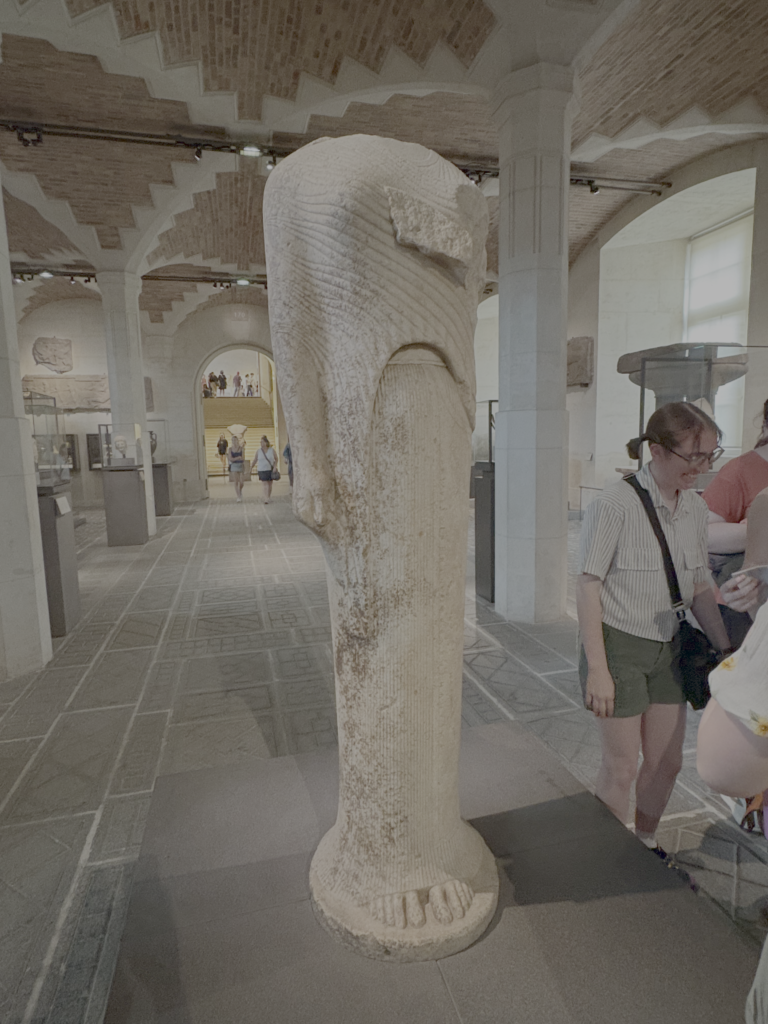
Tirage integral de la Kore de Samos.

Take these three statues for example. The first is an example of a Kore statue, the Tirage integral de la Kore de Samos, which is an excellent example of Greek statuary from the Archaic period, characterized by its simple pose, bare feet, and the simplicity of the clothing articulation. I was shocked to see such a stunning example of the oldest style of Greek statue, especially considering my fascination with the Phrasikleia Kore. The folds in the cloth is of particular interest when comparing it to the Christian saint statues, as both choose simple but effective attention to the way the cloth moves, attempting to depict it even in stone. The serene face is another similarity between the statuaries, giving the figures godlike presence and cementing them as icons of higher power.

Venus de Milo.

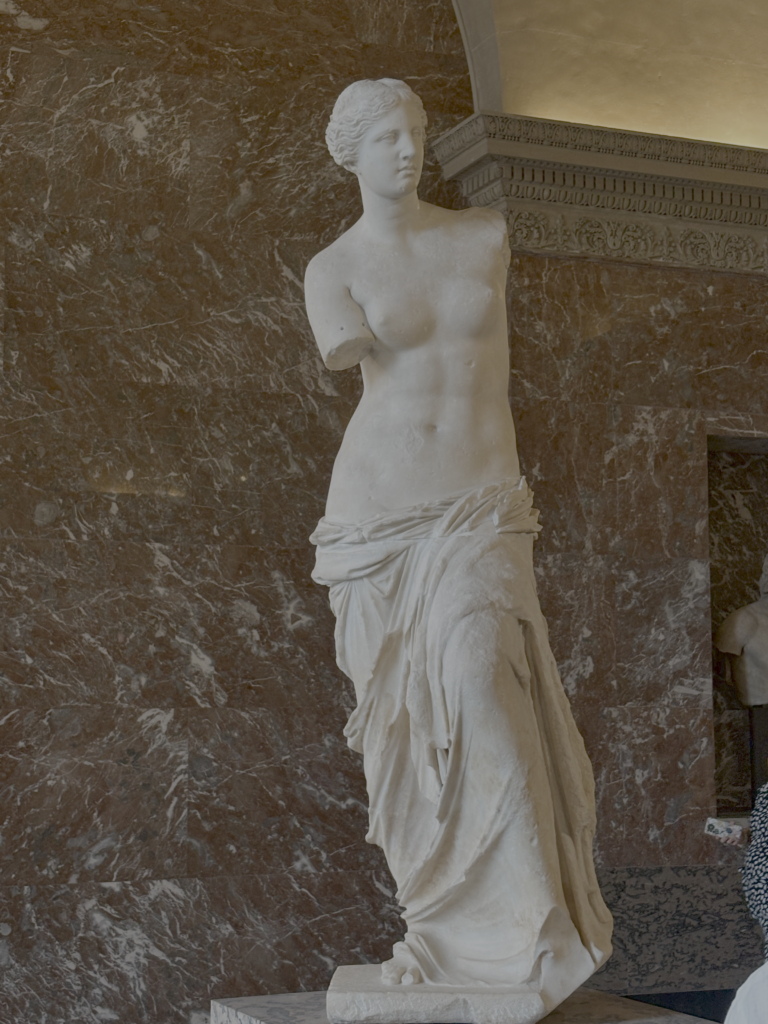
The comparison continues in the greatest breakthrough of the Greeks with Classical period sculpture. The theory of balance and positioning, invented during the Greek art movement, known as the contrapposto stance, is reflected in Christian statuary. There is no greater example of this Greek form method than the Venus de Milo, one of the most iconic art pieces on display in the Louvre. The purposeful angling and bends in the body allow life to breathe into the statues, something lacking in the Archaic period. This careful positioning in the famous Greek statue seems to have had an influence on the Christian sculptures as they seem to attempt the same careful positioning.

Remnants of pigmentation on a statue in the Musée de Cluny.

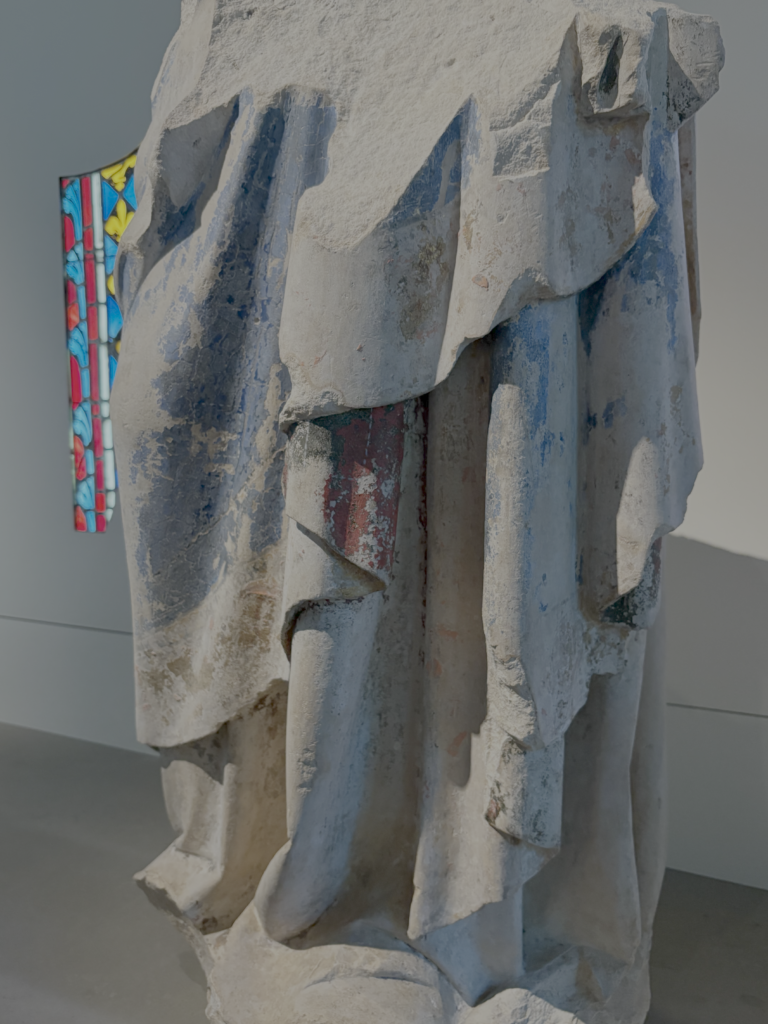
The inclusion of pigment on Christian statues is also reminiscent of statues in antiquity, as they would have also been adorned with bright colors. It’s incredible to visualize how pigments would have looked on ancient statues, as very few examples of Greek or Roman statues with color survive. The MET has a fascinating exhibition, Chroma, on the pigmentation of ancient sculptures, which made this discovery at the Cluny all the more enjoyable.

All this to say (admittedly, very little on Parisian art), it is fascinating to see early French attempts to replicate the statues of Ancient Greece and Rome, as well as their interpretation of the techniques used by ancient sculptors. This interpretation and evolution of art are very similar to the progression of architectural styles and the endless cycle of inspiration and technological evolution. It will be interesting to see how French art continues to develop and draw inspiration throughout the rest of the trip as we explore further along the timeline of Parisian development.