When I learned we were going to visit the Museum of the Army, I was quite indifferent to the idea. I have never been one for military history, and American military museums are often one-note, focusing on the same aspects of American wars. What I had been forgetting was that French military museums would feature some of the coolest aspects of military history: ARMOR. When I walked into that first room to a complete set of horse battle armor, I realized this wouldn’t be a boring visit.
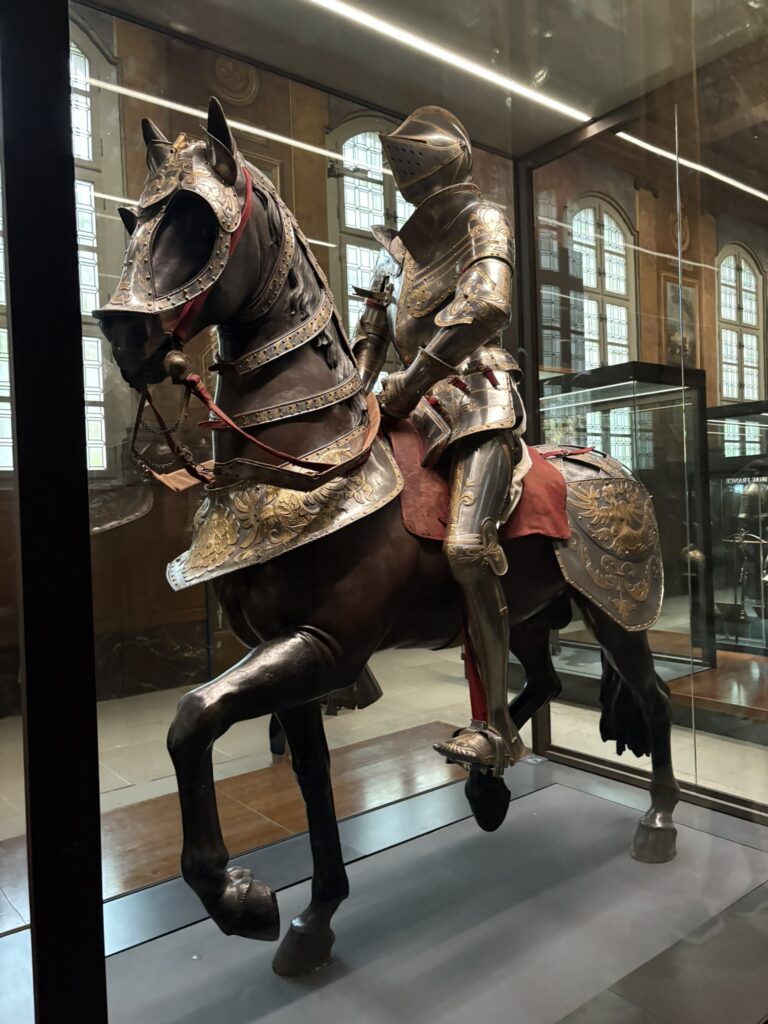
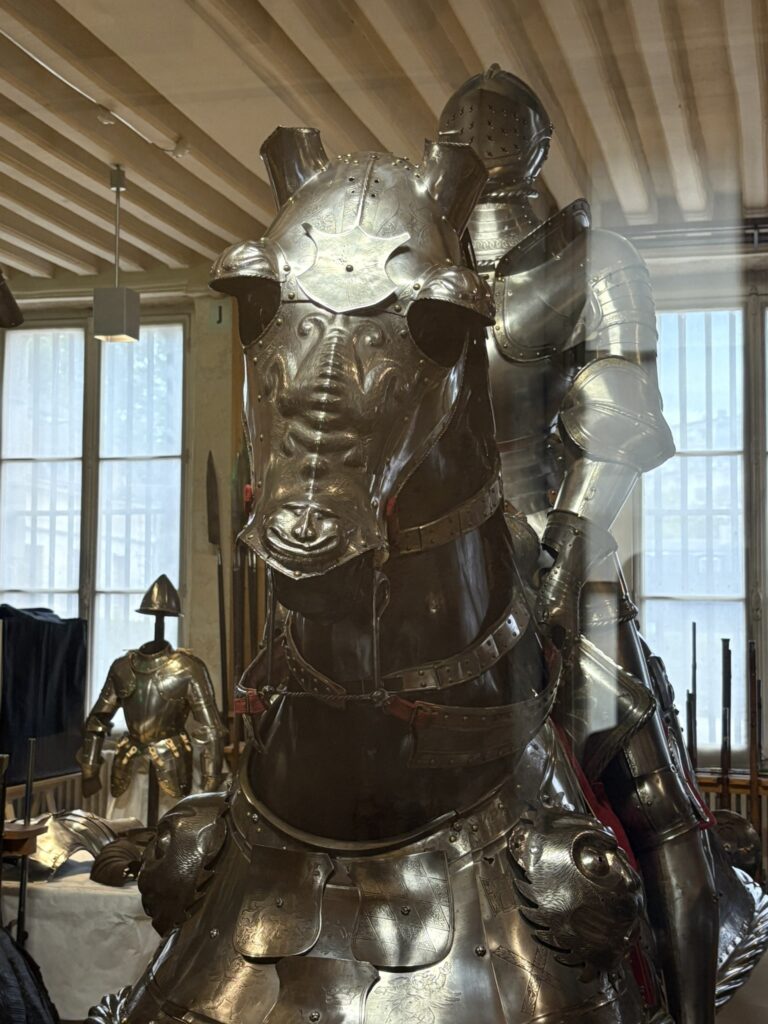
Horse armor, or barding, is not an aspect of equestrian history I knew about before this trip, but after visiting many well-outfitted horse statues, I have done some research I hope to continue to build on. The aspect that has interested me most has been chanfrons, the armor that decorates and protects the horse’s head. The museum had a large collection with a wide variety of shapes and styles. The collection displayed barding from across many eras of mounted warfare and even different cultures.
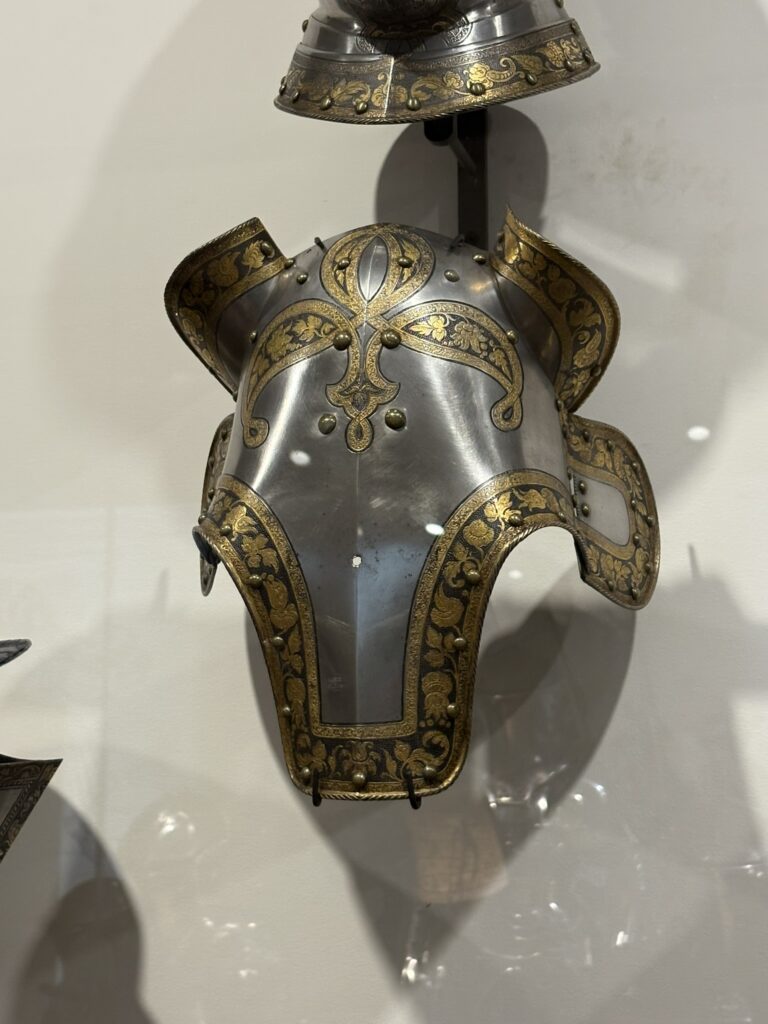
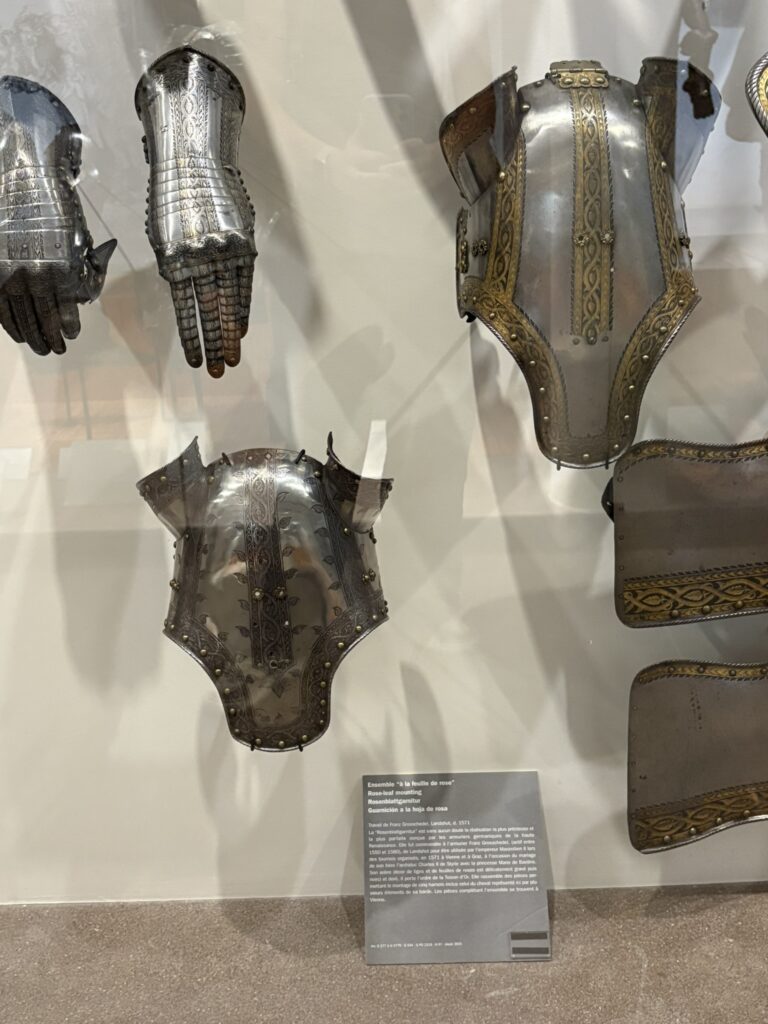
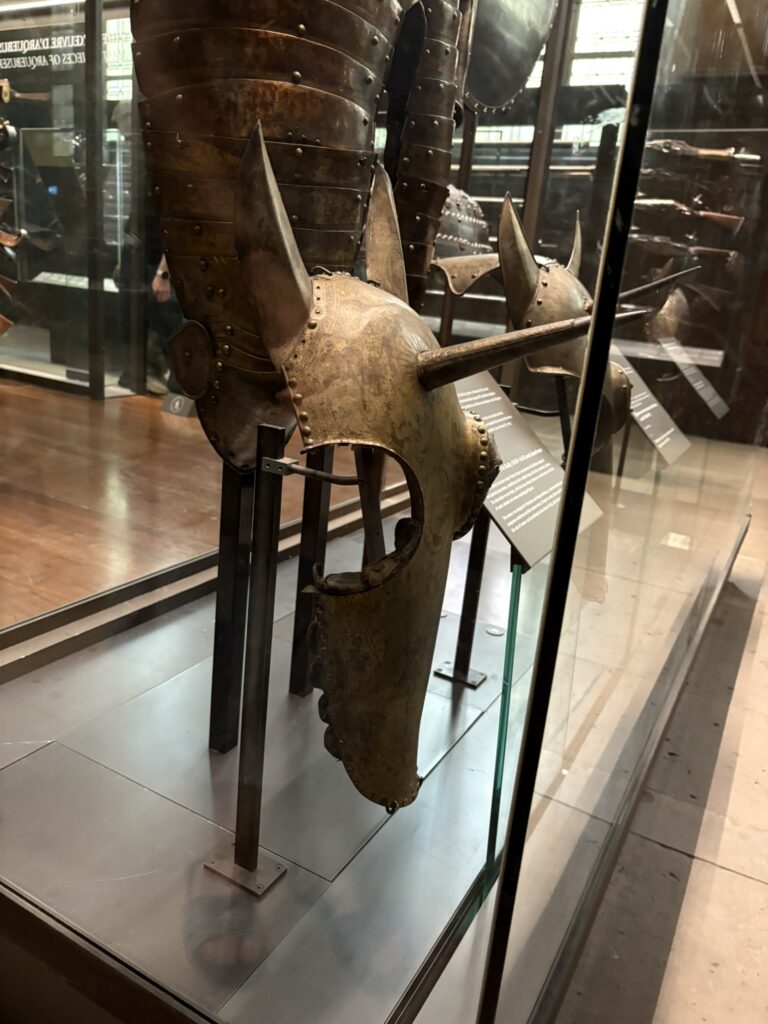
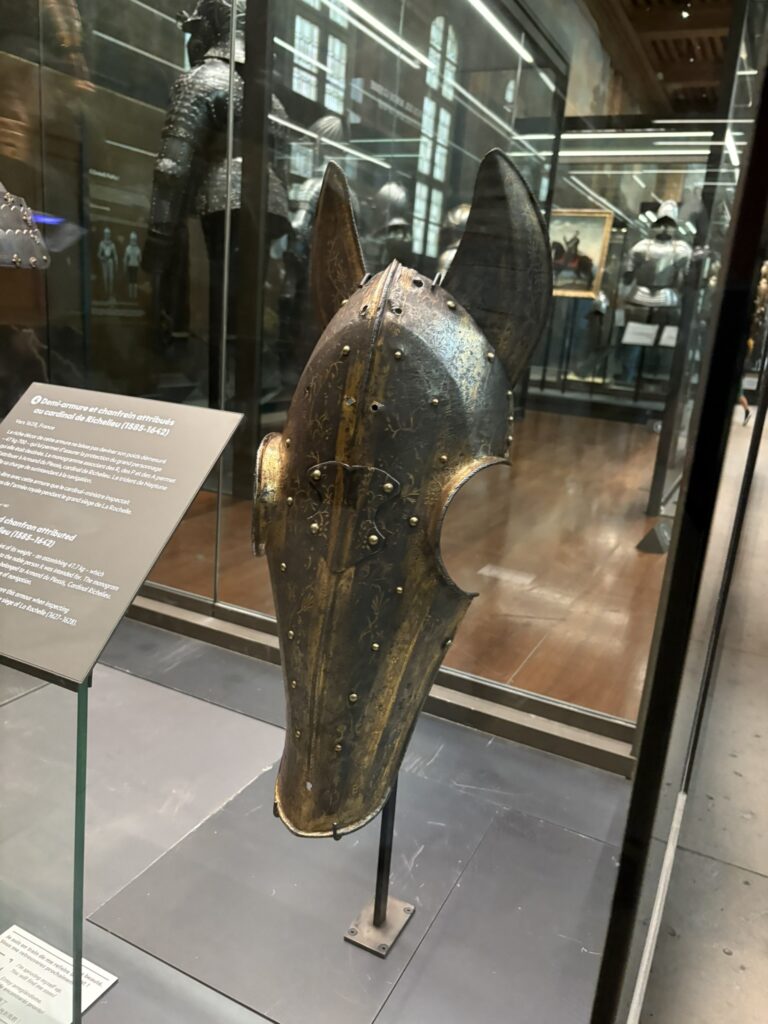
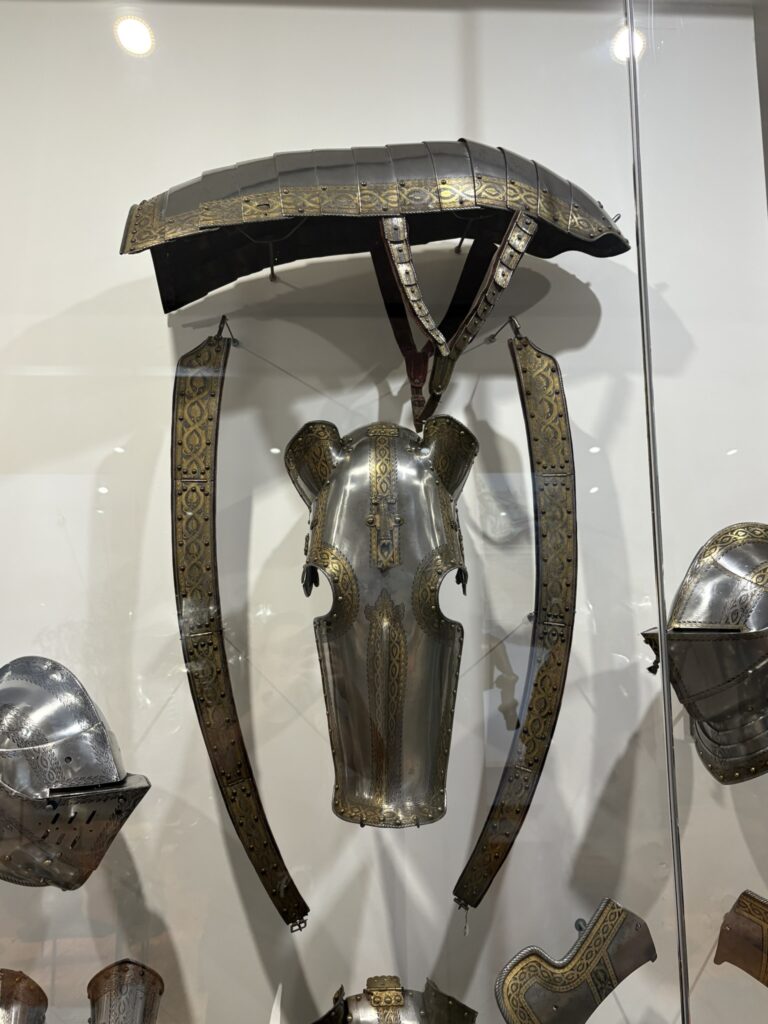
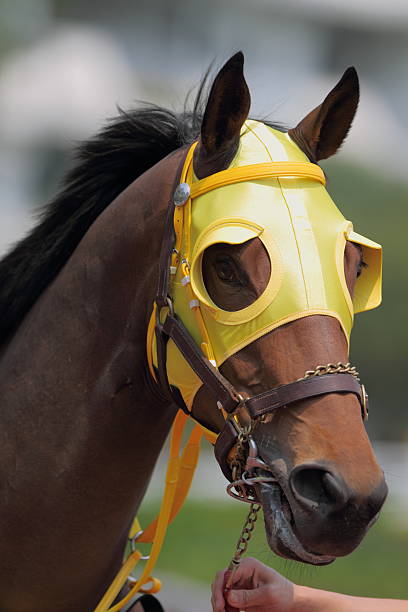
Most feature extra metal and protection at the center of the forehead, between the horse’s eyes, the point most vulnerable when charging an enemy on the battlefield or when jousting. In some cases, it is a flat, decorative plate; in others, it is a spike sticking out that makes the horse look like a unicorn. Many chanfrons also have blinders over the eyes, which serve many purposes, including protection, shielding from dust, and limiting the horse’s field of vision. Because horses are prey animals, blinders can prevent them from panicking in the field of battle as they have to charge enemies. Blinders live on today in thoroughbred racing masks and driving horse bridles, used for similar purposes to the original blinders on chanfrons.
The nose is the other most vulnerable part of the horse’s face, a thin bone that has little protection. Many of the shorter chanfrons would have a second piece that could be attached to protect the nasal area. The nose cover often adds a dragon-like effect to the chanfrons, making the horse more intimidating. The ears are covered to dim the cacophony of battle as well as enlarge the size of the horse’s face.
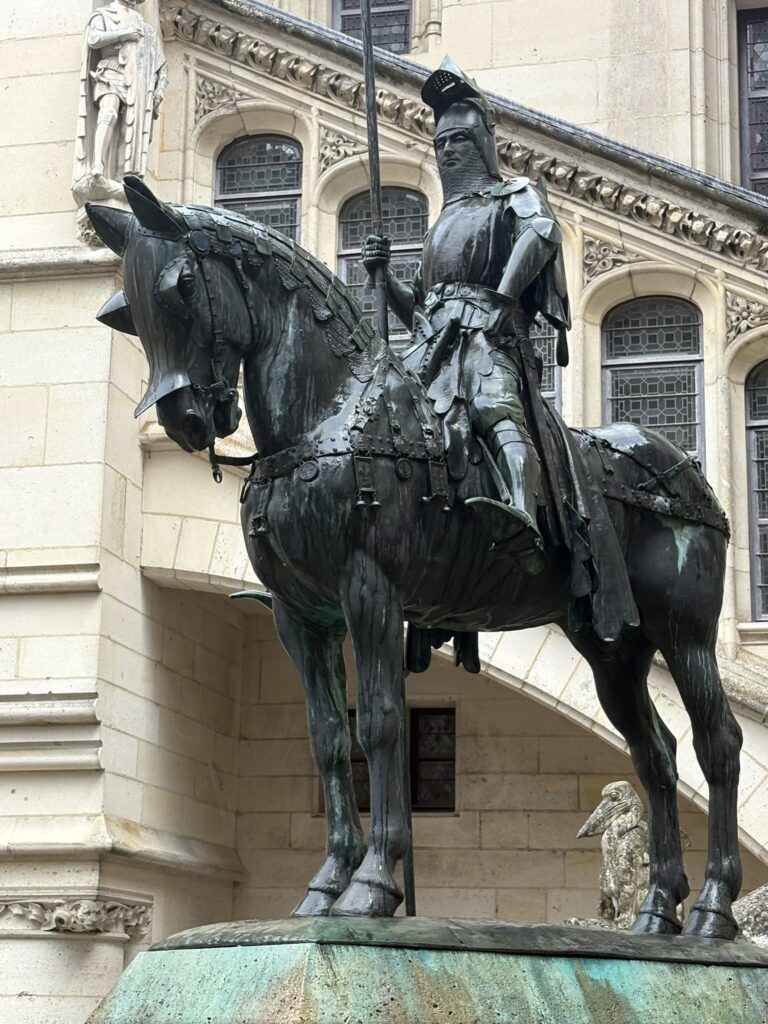
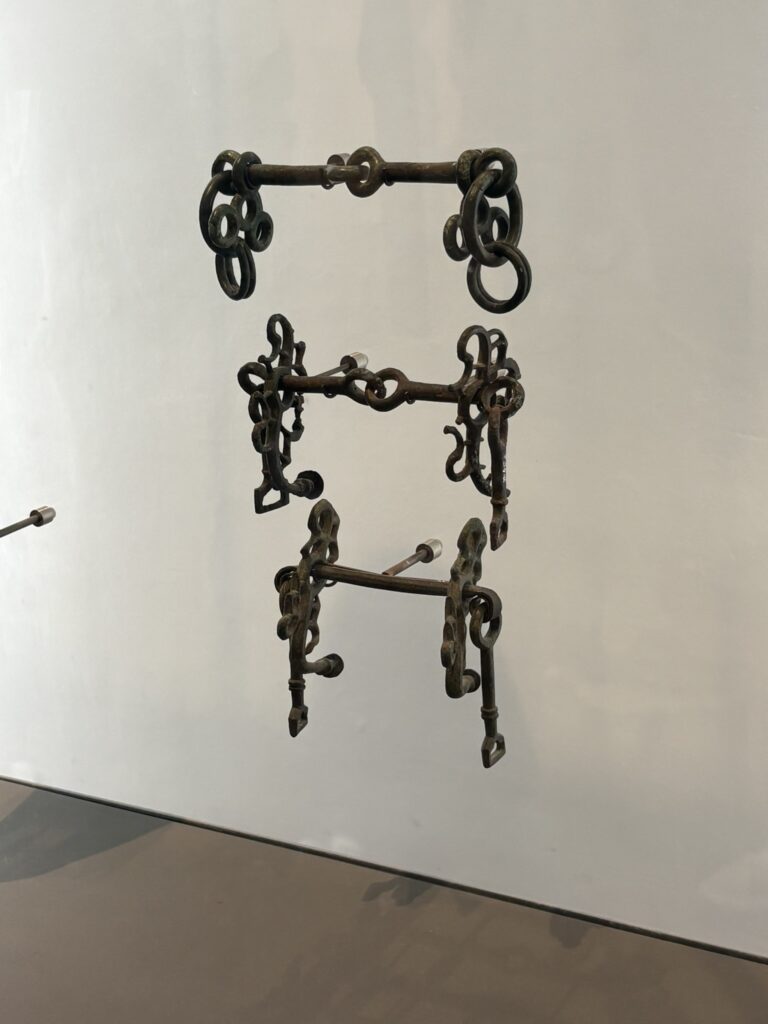
Now on to a topic I do know a good deal about, bits and other accessories. A bit is the piece of metal that sits in the horse’s mouth, used for steering the head of the horse and controlling pace. It’s fascinating to see that most of the bits they had on display were curb bits, which means they use a lever action to apply pressure from two points. It’s hard to describe, but the bit is connected to two reins on each side (reins are the leather straps that the rider holds to steer), one on the top directly next to the bar of the bit, the other connected to the bottom, creating the lever action. Bits of this nature were crucial to mounted military advancement, as the rider could have more control of the horse while only using one hand. Unfortunately, that control comes from the severity of the bits used, a reason bits like these are rarely seen today. The curb bit does still exist in an evolved form, but most associations have strict regulations in place on its use. They are seen in the dressage discipline, which relies on high levels of control between horse and rider and was developed from military training and routines. As a person who has had to use double reins, it is a lot to manage, and I cannot imagine doing all that while also swinging a weapon around.
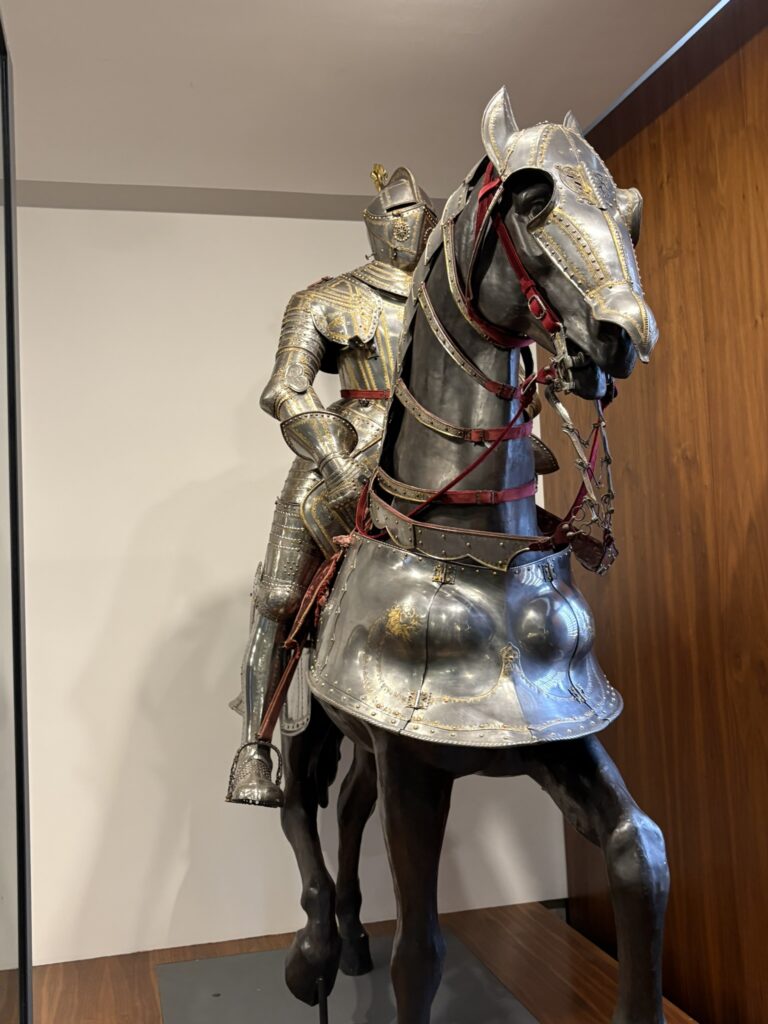
While this has mostly been me rambling for too long, there are some incredible sources of research done on this topic, such as the Warhorse Project, and great places to learn more if you are interested. And there are so many other amazing suits of armor in the museum that display all different periods of barding, designed to fit different styles of warfare. It was very fun to see the armor up close after seeing depictions of barding on equestrian statues across Paris.